How to Choose a Mini Split Heat Pump for Your Home Efficiency?
In recent years, Mini Split Heat Pumps have gained popularity as energy-efficient heating and cooling solutions. A study by the U.S. Department of Energy shows that these systems can reduce energy consumption by up to 30% compared to traditional HVAC systems. Their compact design makes installation easier in homes without ductwork. However, selecting the right mini split heat pump requires careful consideration.
An ideal Mini Split Heat Pump should match your home's heating and cooling needs. Factors such as size, efficiency rating, and climate play crucial roles. According to Energy Star, units with a higher seasonal energy efficiency ratio (SEER) can significantly lower energy bills. Some homeowners may overlook the importance of these technical specifications. It’s worth reflecting on the long-term impacts of your investment.
Additionally, the upfront cost of a Mini Split Heat Pump can be a barrier. Many might choose cheaper options that do not provide optimal performance. Inadequate unit selection may lead to fluctuating temperatures and higher operating costs. Therefore, thorough research and professional advice are essential in making informed choices. Remember, a well-chosen heat pump serves not just your immediate needs but promotes sustainability and comfort in the long term.
Understanding Mini Split Heat Pumps and Their Efficiency Benefits
Mini split heat pumps are gaining popularity for their energy efficiency. According to the U.S. Department of Energy, they can save homeowners up to 30% on heating bills. These systems operate by transferring heat instead of generating it. This makes them a smarter choice for many homes.
Understanding how these systems work is crucial. Mini splits consist of indoor and outdoor units, linked by refrigerant lines. They provide both heating and cooling, allowing year-round comfort. The efficiency ratings, often represented as SEER and HSPF, are critical metrics to consider. Higher ratings mean greater energy savings. A unit with a SEER rating above 20 is considered highly efficient.
Installation is key. A poorly installed mini split may not yield the expected efficiency. Homeowners should consider proper sizing for their space. Units that are too large waste energy, while those that are too small may not heat or cool effectively. Understanding your home's layout is essential to make the right choice. The investment in a mini split can pay off, but it's important to assess all variables.
Assessing Your Home's Heating and Cooling Needs for Proper Sizing
Assessing your home's heating and cooling needs is crucial for selecting the right mini split heat pump. Each home has unique characteristics that influence these requirements. According to the U.S. Department of Energy, properly sizing heating and cooling systems can improve efficiency by up to 30%.
To determine the proper size, start with the square footage of your home. A general rule is to allocate 20 BTUs per square foot. For example, a 1,500 square foot home needs around 30,000 BTUs. However, factors like ceiling height and insulation quality also play vital roles. Older homes may require more BTUs due to less efficient insulation.
Conducting a Manual J calculation offers a more precise assessment. It considers windows, doors, and local climate. According to the ACCA, about 90% of homes have incorrectly sized HVAC systems. This mismatch can lead to energy waste and discomfort. Be diligent in gathering data to make an informed decision. The right size is essential not just for comfort but for energy efficiency.
How to Choose a Mini Split Heat Pump for Your Home Efficiency?
| Dimension |
Data |
| Square Footage |
1,500 - 2,500 sq ft |
| Climate Zone |
Temperate |
| Insulation Quality |
Good |
| Number of Rooms |
5 |
| BTU Capacity Needed |
30,000 BTU |
| Energy Efficiency Rating (SEER) |
16 |
| Heating Season Performance Factor (HSPF) |
8.2 |
| Average Annual Energy Cost |
$1,200 |
Key Features to Look for in a Mini Split Heat Pump
When choosing a mini split heat pump, key features play a crucial role in enhancing home efficiency. One of the most important aspects is the system's SEER (Seasonal Energy Efficiency Ratio) rating. Higher SEER ratings indicate better energy efficiency. Look for a model with a SEER of at least 16. This can lead to substantial energy savings.
Another feature to consider is the heating capacity. Each space requires different BTU (British Thermal Units) based on its size and insulation. Calculate your room size to find the right BTU. An oversized unit can waste energy, while an undersized model may struggle to heat or cool effectively. Tips: Measure your room accurately. Consider sun exposure and ceiling height, as these factors matter too.
Noise levels also warrant attention. Look for models with lower decibel ratings for quieter operation. Many modern units have a "silent" mode. This is helpful during nighttime use. Compact designs can fit into tight spaces, providing flexibility in installation. Remember, aesthetics matter too. Choose a design that complements your home decor.
Pay attention to these features to ensure your mini split heat pump enhances your home's comfort.
Energy Efficiency Ratings: SEER vs. HSPF Explained
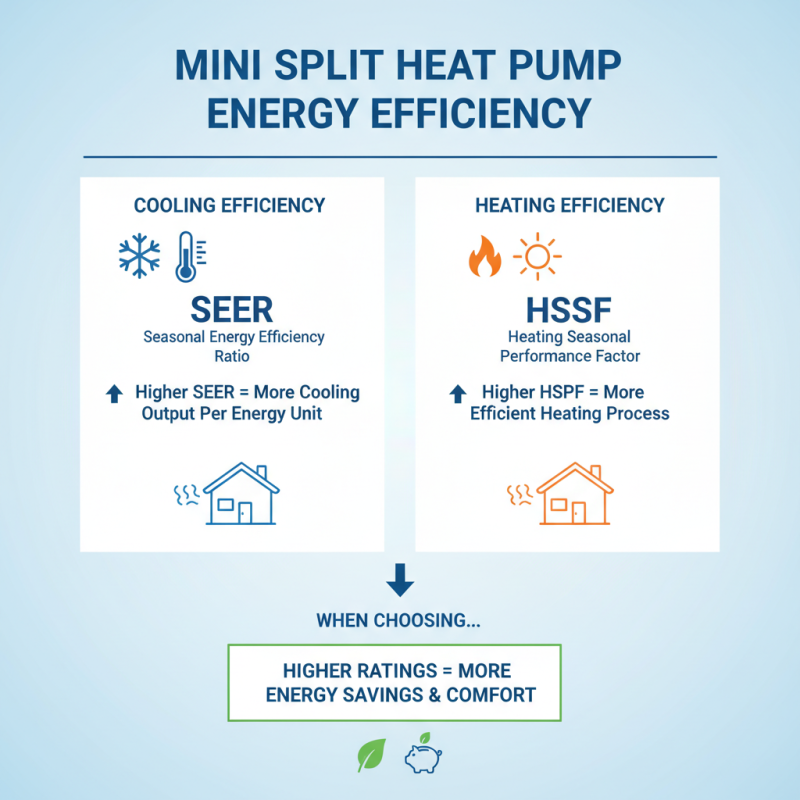
When choosing a mini split heat pump, understanding energy efficiency ratings is crucial. The SEER (Seasonal Energy Efficiency Ratio) measures cooling efficiency, while the HSPF (Heating Seasonal Performance Factor) determines heating efficiency. A higher SEER rating means more cooling output per energy unit. Similarly, a higher HSPF indicates a more efficient heating process.
Pay attention to these ratings when selecting a unit. Many people overlook them in favor of upfront costs. This can lead to higher energy bills over time. Analyze your home's specific needs. Consider the climate, insulation, and the space to be heated or cooled. Not everyone does this, and it can be a mistake.
Small details matter, like the layout of your rooms and the sun exposure they receive. You may find yourself surprised by how inefficient choices can impact comfort. Think about long-term savings versus initial expenses. Reflect on your priorities. Energy efficiency should not be a secondary concern; it is fundamental for sustainable living. Keep in mind that every home is unique. What works for one may not work for another.
Installation Considerations and Maintenance for Longevity
When considering a mini split heat pump, installation plays a crucial role in efficiency. A poorly placed unit can lead to up to a 30% drop in performance. Precise positioning is essential. The ideal location is away from obstructions, ensuring optimal airflow. A central place will provide balanced temperature distribution. According to the Department of Energy, proper installation can improve efficiency by 20%.
Maintenance is equally important for longevity. Regular cleaning of filters and outdoor coils is necessary. Neglecting these tasks can reduce airflow and increase energy consumption. Many homeowners don’t realize that dirty filters may cause a 15% increase in energy usage. Schedule annual inspections with a professional to catch issues early. This can extend the life of your system significantly.
It’s also vital to ensure correct refrigerant levels during installation. An undercharged system can lead to poor heating and cooling performance. Data shows that a level 10% low on refrigerant can cause up to a 15% decrease in efficiency. Don't overlook these details; they can make a significant difference over time.