Why You Should Invest in a Crop Dryer for Your Farming Business
Investing in a crop dryer can revolutionize your farming business. According to the USDA, crops can lose up to 30% of their value due to improper drying. A reliable crop dryer minimizes this risk. By ensuring optimal moisture levels, farmers preserve quality and prevent spoilage.
Furthermore, market trends indicate that the demand for high-quality grains is rising. The International Grains Council projects that global grain production will reach 2.8 billion tons by 2024. In this context, the crop dryer becomes essential for maintaining a competitive edge.
However, many farmers hesitate to invest in this technology. The initial cost can seem daunting. Yet, the long-term savings and increased yields can justify the expense. A good crop dryer not only protects your harvest but also enhances profitability. Reflect on your current drying practices. Are they truly maximizing your potential? Investing in a crop dryer could be the change your business needs.
Benefits of Using a Crop Dryer in Modern Agriculture
In modern agriculture, investing in a crop dryer can significantly enhance productivity. A well-functioning dryer reduces moisture levels in grains and other crops. According to the USDA, post-harvest losses can reach 30% due to excessive moisture. This loss highlights the importance of timely drying.
Using a crop dryer ensures uniform grain quality. When crops dry unevenly, it can lead to spoilage and lower market value. A study by Agri-Tech estimates that precision drying can improve crop quality by at least 20%. This data underscores the economic benefits that farmers can harness by adopting advanced drying technologies.
However, the initial investment can be daunting. Many farmers hesitate to transition. A report from the Farm Bureau notes that 40% of farmers still rely on traditional drying methods. Yet, older methods often lead to inconsistent results. As the agricultural landscape evolves, farmers must consider the long-term benefits of reliable drying solutions. The potential for higher profitability is significant, but it requires a shift in mindset and investment.
Understanding the Types of Crop Dryers Available for Farmers
When considering a crop dryer for your farming business, it’s vital to understand the various types available. Farmers can choose from several options. Each type has unique features that cater to different needs. For example, forced-air dryers use fans to blow warm air through crops. This method reduces moisture content effectively. Some farmers prefer batch dryers for smaller operations. These dryers allow for easier management of different crop types.
Another important option is continuous flow dryers. They provide a steady process for larger harvests, making them efficient for big farms. However, they require a larger upfront investment and can be complex to operate. There is also solar dryers, which harness the sun's energy. While they are eco-friendly, their effectiveness relies heavily on weather conditions.
Farmers must weigh each option carefully. Choosing the right dryer involves understanding your specific crops and operational capacity. It is also important to think about the long-term value and efficiency. Each type has its pros and cons, and farmers need to reflect on what's best for their unique situation. Balancing cost, efficiency, and practicality is essential for making an informed choice.
Investment in Crop Dryers: A Comparative Analysis
This chart illustrates the percentage of farmers who prefer different types of crop dryers based on their benefits, indicating the effectiveness and preference for each type.
Cost-Effectiveness: Analyzing the Return on Investment for Crop Dryers
Investing in a crop dryer can significantly enhance your farming operation's efficiency. Many farmers often overlook this vital equipment. However, the benefits can outweigh initial costs. A dryer helps preserve the quality of your crops by reducing moisture levels. This can lead to better market prices. Dried crops are also less prone to spoilage.
Analyzing the return on investment (ROI) reveals interesting insights. The right dryer can pay for itself in a few seasons. Consider your local market demand and crop types. The more you produce, the clearer the benefits become. However, you need to assess your needs carefully. Not every dryer suits every farming style. It’s essential to think about your specific scale and efficiency goals.
Some farmers may doubt the upfront investment. It's a significant decision. Balancing cost with potential gains is tricky. However, when crops are dried efficiently, stored better, and sold for higher prices, you might notice a considerable difference. Still, demands can fluctuate in the market. Therefore, being prepared for ups and downs is wise.
Enhancing Crop Quality and Shelf Life with Effective Drying Techniques
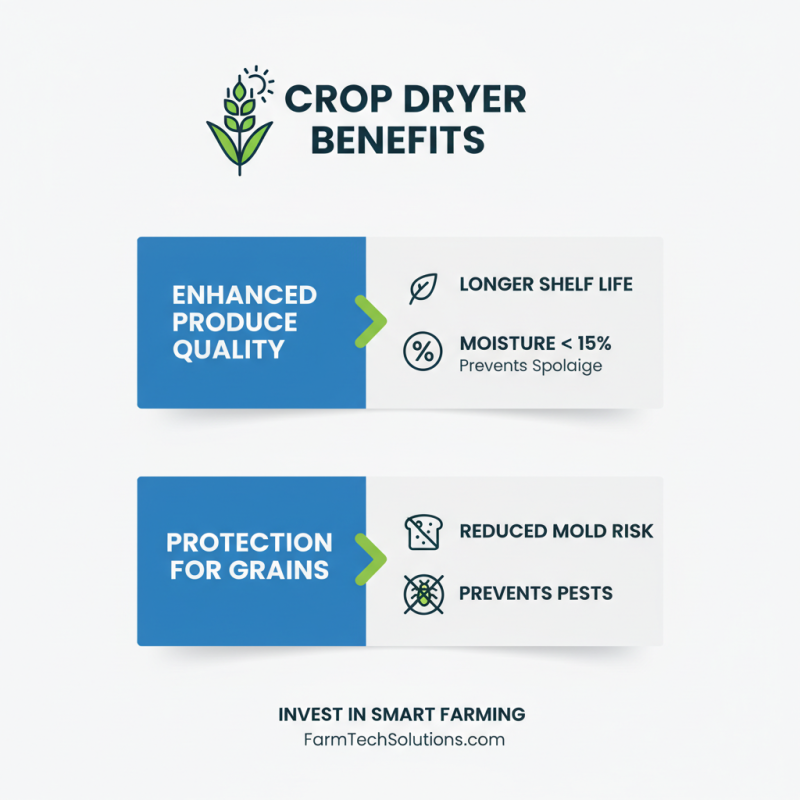
Investing in a crop dryer can significantly enhance the quality and shelf life of produce. According to industry reports, proper drying techniques can reduce moisture content to less than 15%. This level is crucial for preventing spoilage and extending shelf life. For grains, reducing moisture can lower the risk of mold and pest infestation.
Effective drying methods can also increase a farmer's profit margins. A study noted that crops with optimal moisture content can yield up to 20% more in market value. Farmers may find that investing in advanced drying technology pays off quickly. However, initial costs can be high, and not all farmers may see immediate returns. It can be daunting to evaluate the best times to dry crops.
In some cases, farmers still rely on traditional methods. These methods are often less effective but are familiar and low-cost. However, this approach is limiting. The consequences include lower quality produce and shorter shelf life. Reflecting on these choices is essential for long-term success. Investing in a crop dryer is worth the consideration to improve quality and profitability.
Implementing Crop Dryers: Best Practices for Successful Farming Operations
Implementing crop dryers can significantly enhance your farming operations. They help maintain the quality of your harvest. However, choosing the right type can be challenging. Farmers must consider local climate conditions and crop types. It's essential to assess your specific needs. For instance, some crops require different drying temperatures. Understanding these requirements can prevent damage and preserve yield quality.
Training your team is equally important. Workers should know how to operate dryers correctly. Regular maintenance can also extend the lifespan of your equipment. Yet, many overlook this critical aspect. A poorly maintained dryer can lead to inefficiencies and increased costs. Consider scheduling training sessions. Share knowledge among team members about best practices.
Location plays a critical role too. Set the dryer in an area with proper airflow. This will improve drying efficiency. Yet, not every setup will be perfect. Farmers might face challenges like power outages or equipment failures. It's essential to have a backup plan. Reflecting on past experiences can guide future improvements. Each operation is unique; learn from your own success and mistakes.