Leave Your Message
AI Helps Write

Top Corn Dryer Machine Manufacturers for Global Buyers

Selecting a Corn Dryer Machine is a practical decision with consequences that extend beyond harvest. A dryer must handle local crop conditions, daily throughput, available fuel, and the moisture level required for safe storage. A machine that performs well on paper may not fit a farm’s layout or operating schedule. Details matter.

Global buyers also need to assess the manufacturer behind the equipment. Look beyond capacity figures and compare control systems, construction materials, installation support, spare-parts access, and warranty terms. Ask how performance is tested and whether service teams can respond in your region. These questions help separate useful specifications from broad marketing claims.

There is no universal best choice. Some operations value high throughput, while smaller farms may prefer simpler controls and easier maintenance. Energy use deserves close attention, but it should be compared alongside drying consistency and labor requirements. A low purchase price can become less attractive when common parts are difficult to obtain. Not every brochure makes that obvious.

This guide introduces leading Corn Dryer Machine manufacturers for buyers evaluating equipment across different markets. It focuses on practical comparison points rather than treating a single feature as proof of quality. Readers should verify current specifications, local service coverage, and references before making a purchase. Real operating conditions can differ from ideal tests. That is worth remembering.
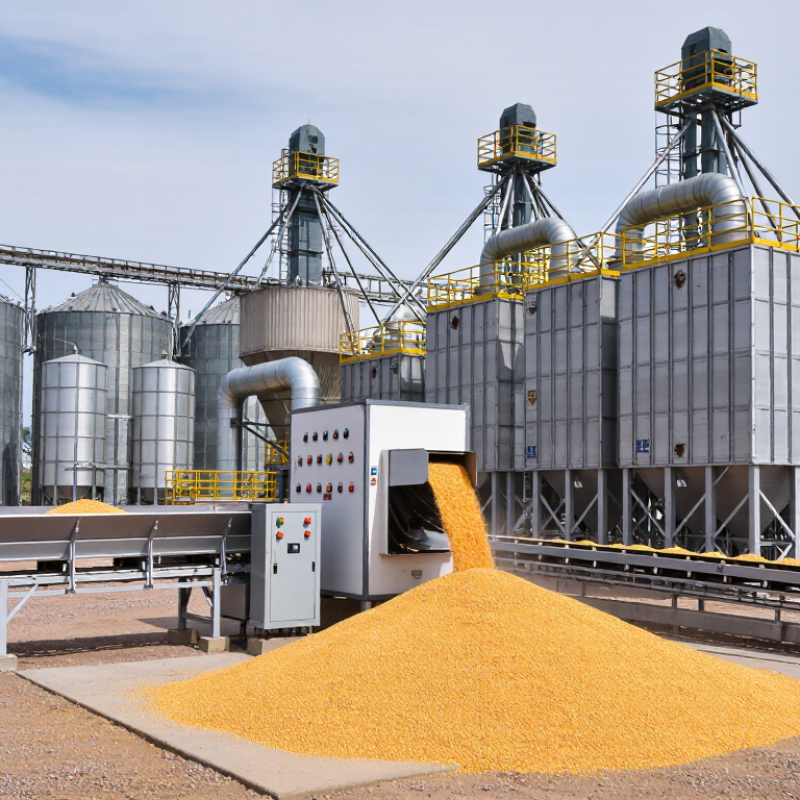
Top Corn Dryer Machine Manufacturers for Global Buyers

How Corn Dryers Reduce 20–25% Harvest Moisture to 13–15% for Storage

Freshly harvested corn often contains 20–25% moisture, too much for dependable storage. A corn dryer removes water with controlled heat and airflow, bringing grain toward 13–15% moisture. The right endpoint depends on storage length, grain condition, and local temperature. Small details matter.

At 25% moisture, kernels need more drying than a simple percentage-point comparison suggests. Operators should measure moisture at several points, since a warm, uneven grain stream can give misleading readings. Reduce heat or adjust airflow when kernels show stress cracks. Those cracks may increase during handling. Drying too aggressively can save hours but damage quality.

After drying, cool the corn before placing it in a bin, and check samples again after they settle. A calibrated meter helps, though it does not replace representative sampling. The target looks neat on paper; real bins are less uniform. If moisture rises in one area, inspect airflow and redistribute grain where practical. Keeping records of inlet moisture, dryer settings, and outlet readings makes adjustments more reliable from one harvest day to the next.
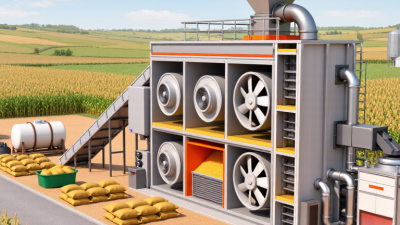
Continuous-Flow, Batch, and Recirculating Dryers: Capacity and Fuel Trade-Offs

Continuous-flow dryers suit large harvest windows: wet corn moves steadily through heated zones, and operators can tune discharge moisture without stopping each load. Their rated capacity can mislead. A 10,000-bushel-per-day rating may fall when incoming grain is wetter or temperatures drop. Batch dryers offer simpler load-by-load control, but waiting between fills can create a bottleneck when trucks arrive together. Recirculating systems repeatedly move grain through heat, improving moisture uniformity, though their extra handling adds time and mechanical complexity.

Fuel use deserves equal attention. University of Minnesota Extension’s grain-drying guidance puts typical high-temperature energy use at roughly 1,500–2,500 Btu per pound of water removed. Iowa State University Extension’s grain-drying cost guidance uses about 0.02 gallons of propane per bushel per moisture point as a planning estimate. Actual use changes with grain condition, airflow, burner adjustment, and weather. That matters. Continuous-flow equipment often favors throughput; batch systems can suit variable lots, while recirculating designs prioritize even drying. Compare fuel per bushel at the same moisture reduction, not brochure capacity alone. Check whether the quoted figure assumes warm, dry harvest conditions. It often does. And that assumption may not fit a muddy field or a cold October night.

Corn Dryer Capacity and Fuel Trade-Offs

Indicative throughput ranges for continuous-flow, batch, and recirculating dryers

How to read this: Bars show broad planning-level ranges in metric tonnes per hour; batch capacity is expressed as an approximate hourly equivalent based on batch size and cycle time. Actual throughput depends on crop moisture, target moisture, ambient conditions, and equipment configuration. Batch systems offer flexibility for smaller lots, while continuous-flow systems suit higher throughput. Recirculating designs redistribute grain during drying; fuel use and efficiency vary with heat recovery, airflow, and operating settings. Compare manufacturer specifications for the same crop and drying conditions before selecting a system.

Comparing Manufacturers by Rated Capacity at a 5-Point Moisture Drop

Top Corn Dryer Machine Manufacturers for Global Buyers

Rated capacity is meaningful only when every supplier quotes the same moisture reduction. Compare bushels per hour for a five-percentage-point drop, such as 20% to 15%, and request the test’s grain temperature, airflow, and ambient conditions. ASABE drying guidance treats these factors as important to drying performance; a single capacity figure cannot describe every operating day. Still, ratings can mislead.

A useful cross-check is water removal. Using a standard 56-pound corn bushel and wet-basis moisture, drying from 20% to 15% removes about 3.3 pounds of water per bushel. Iowa State University Extension grain-drying guidance explains why moisture content and operating conditions matter when estimating dryer performance. Ask manufacturers for measured throughput at the same inlet and outlet moisture, plus fuel or energy use per bushel. Also confirm whether the stated rate assumes continuous-flow operation or includes handling delays.

Tips: Request the test sheet, not just a brochure number. Check the fine print. If your harvest moisture varies, ask for capacity at more than one five-point reduction; one rating may not reflect your season.

Top Corn Dryer Machine Manufacturers for Global Buyers - Comparing Manufacturers by Rated Capacity at a 5-Point Moisture Drop
Illustrative Rated Wet-Corn Feed Incoming Moisture Target Moisture Moisture Reduction Calculated Dried-Corn Output Calculated Water Removed
10 metric tonnes per hour 25% (wet basis) 20% (wet basis) 5 percentage points 9.375 metric tonnes per hour 0.625 metric tonnes per hour
20 metric tonnes per hour 25% (wet basis) 20% (wet basis) 5 percentage points 18.750 metric tonnes per hour 1.250 metric tonnes per hour
30 metric tonnes per hour 25% (wet basis) 20% (wet basis) 5 percentage points 28.125 metric tonnes per hour 1.875 metric tonnes per hour
40 metric tonnes per hour 25% (wet basis) 20% (wet basis) 5 percentage points 37.500 metric tonnes per hour 2.500 metric tonnes per hour
These are calculated capacity scenarios, not verified ratings for specific manufacturers or machines. The calculation assumes a constant dry-matter flow: dried output = incoming feed × (1 − 0.25) ÷ (1 − 0.20); water removed = incoming feed − dried output. Actual rated capacity depends on the model, grain condition, ambient conditions, airflow, and the manufacturer’s test basis. Compare manufacturer nameplate figures only when their test conditions and moisture basis match.

How to Assess Global Manufacturers: Product Range, Controls, and Safety Standards

Global buyers should assess dryer capacity against harvest volume, crop moisture, and local operating conditions. USDA NASS estimated 2024 U.S. corn production at 14.9 billion bushels in its December 2024 Crop Production report. That scale makes throughput claims worth checking against real operating hours, not brochure figures alone. Compare batch and continuous-flow options, adjustable temperature ranges, fuel choices, and access to replacement parts. A supplier should explain how the proposed model handles humid weather and uneven incoming moisture. Small details matter.

Controls deserve a practical test. Ask whether operators can set target moisture, monitor grain temperature, and review alarms or drying records. Confirm sensor calibration procedures and whether the system can slow or stop when readings fall outside limits. A neat dashboard can still conceal poor sensor placement. Request a demonstration using grain with moisture levels similar to your harvest, then compare readings with an independent moisture meter. Capacity alone misleads.

Safety documentation should cover guards, emergency stops, dust control, fire detection, and maintenance isolation procedures. NFPA 660, Standard for Combustible Dusts and Particulate Solids, 2025 edition, provides a useful reference for combustible-dust hazard management. It is not a substitute for checking applicable local requirements. Ask for the risk assessment, operating instructions, and staff training records before purchase. A missing document is not a minor inconvenience; it can reveal weak commissioning or support.

Global Buyer Checklist: Energy Use, Installation, Spare Parts, and Service Coverage

For global buyers, a corn dryer’s quoted capacity means little without its test conditions. Ask manufacturers for fuel and electricity use per tonne, moisture-removal rate, and the inlet and outlet moisture levels behind each figure. The FAO’s 2023 report, The State of Food and Agriculture, estimates that 13.2% of food was lost between harvest and retail in 2021. Drying cannot prevent every loss, but reliable moisture control can protect grain quality. Request operating data from a comparable installation, not only a best-case brochure number.

Check installation requirements before comparing prices. Confirm foundation loads, duct dimensions, power supply, fuel connections, and who supervises commissioning. Ask how the system handles uneven incoming moisture and whether sensors need routine calibration. Small details matter. A blocked access panel can turn a quick inspection into hours of downtime. Then check parts. Get a written list of critical spares, typical dispatch times, and local stock locations. Ask which components can be serviced by trained local technicians, and which require factory support. Verify service coverage in writing, including response hours and remote troubleshooting. One number can mislead. A low energy figure may reflect different weather, grain conditions, or operating settings, so compare like with like. I would still want a real-season reference; paperwork alone is not proof.