Leave Your Message
AI Helps Write

2026 Best Grain Dryer Types for Global Buyers?

Choosing the right Grain Dryer in 2026 requires more than comparing capacity and purchase price. Global buyers must examine crop type, starting moisture, climate, energy access, and local service support. A machine designed for dry corn may not protect rice, wheat, coffee, or delicate seeds equally well. Performance varies.

This guide compares mixed-flow, cross-flow, recirculating, tower, mobile, and solar-assisted grain dryer systems. Each type offers different advantages for farms, cooperatives, grain traders, and industrial processors. A mobile dryer may suit seasonal operations with changing fields. A tower dryer can deliver continuous throughput, but it needs stronger infrastructure and trained operators. Mixed-flow systems often provide balanced drying, while recirculating models can offer flexible batch control.

Real operating details matter. Buyers should check drying capacity at a defined moisture reduction, not only the advertised hourly figure. They should also review fuel consumption, airflow control, temperature uniformity, noise, cleaning access, and spare-parts availability. A reliable supplier should provide test data, installation guidance, operator training, and responsive after-sales support.

Yet no dryer performs perfectly in every region. Humid coastal air, unstable electricity, dusty storage areas, and uneven grain quality can reduce results. Specifications may look impressive on paper. Field performance deserves closer attention. Independent references and trial data can reveal weaknesses before investment. This 2026 overview helps global buyers compare practical dryer types, identify hidden operating costs, and select equipment that protects grain quality through changing harvest conditions.
2026 Best Grain Dryer Types for Global Buyers?

Set 2026 Moisture Targets: 13–14% for Maize and 12–14% for Wheat

Choosing the best grain dryer in 2026 starts with a clear moisture target, not a machine label. For maize, aim for 13–14% moisture after cooling. Wheat commonly needs 12–14%, depending on storage time, market rules, and local climate. These figures are practical targets, not universal commands. A humid coastal warehouse may require tighter control than a dry inland store.

Continuous-flow dryers suit large harvests and steady fuel supply.

Mixed-flow designs can reduce stress on kernels when temperature control is accurate.

Batch dryers offer flexibility for smaller farms or changing grain types.

In field operations, operators should measure moisture at the dryer outlet and again after cooling. Warm grain can give a misleading reading. Kernels may feel dry while moisture remains in the center.

Tips:

Take samples from several points, not one bucket. Calibrate the moisture meter regularly. Reduce drying temperature when wheat is for milling or seed use. Watch for cracked maize, burnt odors, and uneven discharge. Keep records of inlet moisture, outlet moisture, air temperature, and drying time. Small details matter.

A target of 13% may protect maize during long storage, but overdrying wastes energy and can reduce saleable weight. Wheat at 12% may store safely in some conditions, yet 14% may be risky during prolonged humidity. I have seen operators trust one reading too quickly. That habit deserves review. Grain condition, airflow, ambient weather, and cooling time must shape the final decision.
Classify Grain Dryers by Airflow: Batch, Cross-Flow, Mixed-Flow, and Tower

2026 Best Grain Dryer Types for Global Buyers

Classify Grain Dryers by Airflow: Batch, Cross-Flow, Mixed-Flow, and Tower

Grain dryer selection depends on crop, moisture variation, energy cost, and daily throughput. Batch dryers load a fixed quantity into a chamber, then circulate heated air through the grain. They suit smaller farms, changing crops, and operators who need flexible control. However, unloading and reloading can slow busy harvest operations.

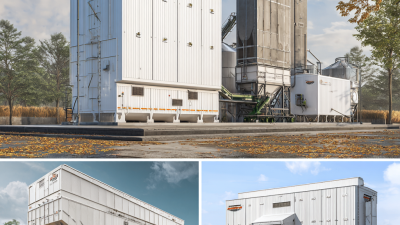
Cross-flow dryers move air horizontally across a moving grain column. They offer simple construction and strong capacity, but moisture can vary between the air-inlet and air-outlet sides. Mixed-flow dryers guide air through grain in several directions, improving uniformity and often reducing grain stress. Tower dryers use vertical columns and continuous grain movement, making them practical for high-volume commercial handling. Their height requires careful foundation planning, service access, and dust-control design. In practice, categories can overlap. A tower dryer may also use mixed-flow airflow. This is easy to overlook.

Tips: Check inlet and outlet moisture separately. Inspect grain temperature near discharge. Allow for local humidity, fuel quality, and seasonal harvest peaks. A short field trial is safer than relying only on catalog capacity. Operators should also record broken kernels, fan power, and drying time. Small data gaps can lead to expensive decisions.

2026 Best Grain Dryer Types for Global Buyers? - Classify Grain Dryers by Airflow: Batch, Cross-Flow, Mixed-Flow, and Tower

Dryer Type Airflow Principle Typical Operating Mode Common Grain Capacity Range Typical Moisture Reduction per Pass Energy and Heat Characteristics Main Advantages Limitations and Buyer Considerations
Batch Dryer Heated air passes through a stationary batch of grain, usually from the bottom upward or through perforated floors and ducts. Fill, dry, cool, and unload as separate steps. Some systems support continuous recirculation within the drying chamber. Approximately 5–100 tonnes per batch, depending on chamber size, grain type, and target moisture level. Commonly about 3–8 percentage points of moisture per batch; the actual result depends on air temperature, residence time, and grain depth. Generally moderate to high energy use per tonne when operated at small scale. Lower-temperature operation is practical for seed and food-grade grain. Flexible for different grains; suitable for farms, cooperatives, seed processing, seasonal operation, and locations with variable throughput. Usually requires more labor and longer drying cycles. Moisture uniformity can vary if airflow distribution or grain leveling is inadequate.
Cross-Flow Dryer Grain moves vertically while heated air travels horizontally across the grain column, creating a crosswise air-and-grain path. Usually continuous-flow operation, with grain entering at the top and leaving through an adjustable discharge system. Approximately 5–50 tonnes per hour of wet grain in common commercial installations; larger capacities are possible with parallel modules. Often about 4–8 percentage points per pass, although the permissible reduction depends on the crop, air temperature, and discharge speed. Straightforward design and strong throughput, but airflow and temperature can differ between the hot-air side and exhaust-air side. Mature technology, relatively simple controls, high availability, and suitability for rice, maize, wheat, barley, and other bulk grains. Moisture gradients may occur across the grain column. Grain mixing, tempering, or multiple drying passes may be needed for tighter uniformity.
Mixed-Flow Dryer Grain flows downward through alternating layers of heated and exhaust-air ducts, allowing air to contact grain from multiple directions. Continuous-flow operation with controlled grain residence time, airflow, and outlet temperature. Approximately 10–100 tonnes per hour of wet grain, with capacity determined by tower size, grain depth, and installed airflow. Commonly about 3–6 percentage points per pass, supporting gradual drying with reduced thermal stress. Typically offers good thermal efficiency because air distribution is more balanced and exhaust heat can be managed effectively. More uniform drying, lower risk of overheating, good grain quality, and strong suitability for commercial and export-oriented facilities. Higher purchase cost and greater control-system complexity than many basic cross-flow units. Requires reliable cleaning and maintenance.
Tower Dryer A tall vertical drying structure in which grain descends by gravity through one or more drying, tempering, and cooling sections. Continuous operation, normally integrated with receiving pits, elevators, grain cleaners, storage bins, and automated discharge controls. Approximately 20–200 tonnes per hour of wet grain for medium-to-large commercial systems; project-specific designs may be larger. Commonly about 2–6 percentage points per pass, with multiple zones used to control drying rate and final moisture. Efficient for high-throughput facilities. Multi-zone heat recovery, tempering, and cooling can reduce energy consumption and grain stress. High capacity, compact land footprint relative to throughput, automation potential, and suitability for ports, mills, elevators, and large farms. High capital investment, significant building and conveying requirements, and more demanding installation, safety, and maintenance planning.

Data note: Capacity and moisture-removal figures are indicative engineering ranges rather than guaranteed performance values. Actual results vary with grain species, initial and final moisture content, ambient conditions, air temperature, airflow rate, grain cleanliness, kernel size, and local safety requirements. Final selection should be based on a site-specific performance test and a complete energy, handling, and installation assessment.

Compare Drying Performance at 0.5–1.0% Moisture Removal per Pass

2026 Best Grain Dryer Types for Global Buyers?

Removing 0.5–1.0 percentage points of moisture per pass requires controlled heat, airflow, and residence time. Mixed-flow dryers usually provide more uniform exposure than cross-flow designs. That matters. CIGR’s Handbook of Agricultural Engineering identifies airflow distribution and grain-bed depth as major drivers of drying uniformity. A deeper bed can increase capacity, but it may also create wetter kernels near the outlet.

For corn, wheat, and rice, continuous mixed-flow systems suit buyers seeking steady moisture reduction with fewer thermal shocks. Cross-flow dryers can deliver strong throughput, yet their moisture gradient may require careful tempering or a second pass.

Batch dryers offer flexibility for smaller facilities and changing crops, although loading and unloading can reduce practical capacity. ASABE S448.1 provides terminology and testing guidance for grain-drying performance, while USDA grain-quality guidance stresses representative sampling before and after drying. Measure every lot.

A 0.5% pass may preserve quality when kernels are fragile or heat-sensitive. A 1.0% pass can reduce handling time, but excessive air temperature may increase stress cracks, discoloration, or uneven final moisture. Real performance depends on crop variety, initial moisture, ambient humidity, and airflow pressure. Published capacity figures are not always comparable. That is the uncomfortable part. Buyers should request test data at their target moisture range, not only maximum tonnes per hour.

Benchmark Energy Use: 1,200–1,800 kJ per Kilogram of Water Removed

2026 Best Grain Dryer Types for Global Buyers?

For global buyers, dryer selection should begin with energy performance, not capacity alone. The practical benchmark is 1,200–1,800 kJ per kilogram of water removed. This figure measures thermal energy, not electricity consumption alone. Continuous-flow dryers can suit large harvests and steady operating conditions. Mixed-flow dryers often provide gentler grain movement and more uniform drying. Recirculating dryers may offer useful flexibility for changing crop volumes. Actual results depend on grain moisture, ambient humidity, airflow, and final moisture targets.

In field evaluations, I record inlet moisture, outlet moisture, fuel use, and drying time. A dryer reaching 1,300 kJ/kg under controlled conditions may perform differently during a humid harvest. Poor airflow, unsealed heat paths, or uneven loading can increase consumption quickly. Fuel quality, insulation, and heat recovery also affect the result. The lower benchmark is not automatically better. Some test sheets look impressive. That requires caution.

Tips: Request test data using your crop and target moisture range. Ask how energy use was calculated. Confirm whether the figure includes fan power, burner losses, and standby time. Inspect airflow paths and cleanout access before purchase. A small on-site trial can reveal problems that brochures miss. My own preference is measured consistency over a perfect laboratory number, because farm conditions rarely stay perfect.

2026 Best Grain Dryer Types for Global Buyers

Benchmark energy use: 1,200–1,800 kJ per kilogram of water removed

Mixed-flow and concurrent-flow dryers generally operate toward the lower end of the benchmark range, while cross-flow and recirculating batch systems may require more energy per kilogram of water removed. Actual performance varies with crop type, initial moisture, final moisture, ambient conditions, airflow, and heat recovery.

Values shown are technology-level planning benchmarks, not company or brand performance data.

Match Capacity, Fuel, and Climate: From 1 to 100+ Tonnes per Hour

2026 Best Grain Dryer Types for Global Buyers?

Choosing a grain dryer starts with throughput, not appearance. A 1–5 tonnes-per-hour batch dryer suits small farms and flexible harvest schedules. Units handling 10–30 tonnes per hour fit cooperatives and regional storage sites. Large commercial operations may need 50–100+ tonnes per hour. However, rated capacity often assumes a specific moisture reduction. A dryer removing six percentage points works differently from one removing twelve.

Fuel selection should reflect local supply, operating cost, and maintenance skills. Gas provides steady heat and precise control where infrastructure is reliable. Biomass can reduce fuel spending, but it demands consistent fuel quality and careful ash management. Electric systems offer clean, responsive heating, though grid capacity may limit large installations. Avoid choosing fuel from price alone. Seasonal shortages can change the calculation.

Tips: Test grain moisture before sizing equipment. Check airflow at peak loading. In humid climates, use stronger ventilation and insulated ducts. Cold regions may need preheating and frost protection. Rice and maize often require gentler drying than wheat. Confirm final moisture with calibrated meters, not guesswork. A practical mistake is trusting catalogue capacity without testing local grain. Real harvest conditions are messier. Ask for performance data using your crop, moisture range, and ambient temperature.