China’s heat pump market offers global buyers a broad mix of engineering capability, production scale, and export experience. This guide examines ten Chinese manufacturers associated with Evi Heat Pump solutions, with attention to product range, application fit, and evidence buyers can check. EVI, or enhanced vapor injection, can support heating performance in colder conditions. Yet performance depends on system design, installation, and operating temperatures. A feature on a datasheet is not a field result.
IEA Executive Director Fatih Birol has described heat pumps as “a key technology for decarbonising heating.” For buyers, the practical question is how each supplier turns that technology into reliable equipment. Compare heating capacity across stated outdoor temperatures, not just headline efficiency. Check refrigerant, compressor sourcing, noise data, controls, and warranty terms. Ask for test reports and references from projects in climates similar to yours. Small details matter.
The manufacturers in this overview should be treated as candidates, not automatic recommendations. A factory tour can reveal production discipline, but it cannot replace independent testing or careful contract review. Neither can a polished brochure. Verify certifications for the destination market and confirm who handles commissioning, spare parts, and after-sales support. Some suppliers may excel at customization; others may offer stronger documentation or service networks. That difference matters more than a ranking position. Even a promising shortlist leaves unanswered questions, so buyers should validate claims before placing an order.
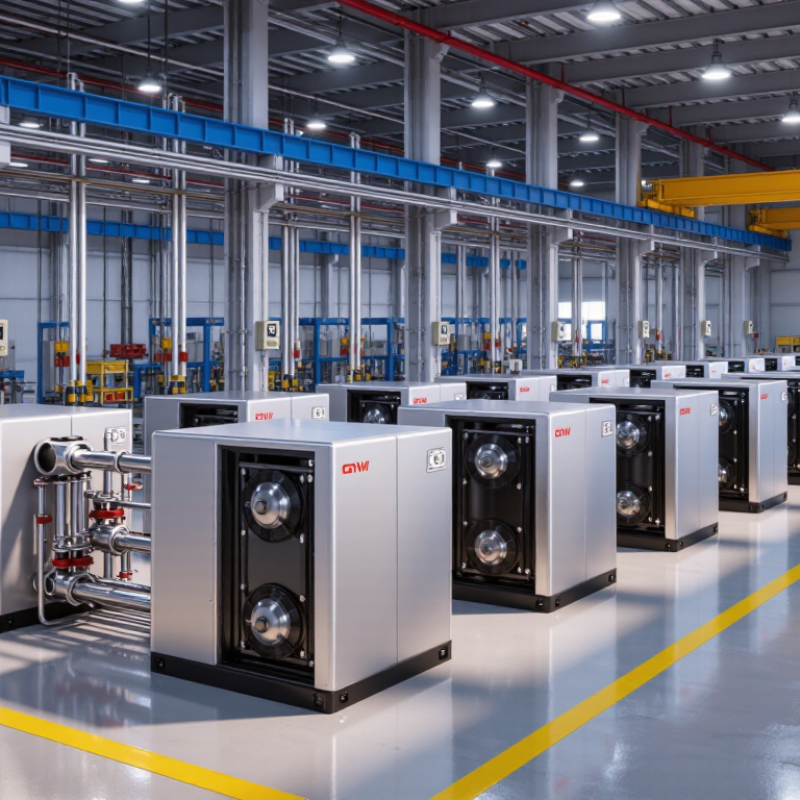
An EVI heat pump uses enhanced vapor injection to improve heating performance in cold weather. EVI means “enhanced vapor injection.” During the refrigeration cycle, a portion of refrigerant passes through an economizer, cools, and enters the compressor at an intermediate stage. This helps manage compressor temperatures and can support heating capacity when outdoor air is cold. The system still draws heat from its surroundings. It does not create heat from electricity alone.
Picture a frosty morning: the outdoor coil absorbs available heat, and the refrigerant carries it indoors. The injection process can help the compressor deliver hotter refrigerant without operating under the same strain as a conventional cycle might face. A controller adjusts operation as temperatures and heating demand change. Some models also use defrost cycles, which temporarily interrupt heat collection to clear ice from the outdoor coil. Brief pauses are normal.
EVI does not guarantee the same output or efficiency in every building. Results depend on outdoor temperature, water or air delivery temperature, system design, and installation quality. A high supply-water temperature may reduce efficiency, even with injection. Check published performance data at relevant operating conditions, not just a single headline rating. Correct sizing matters. So does careful commissioning. One detail is easy to overlook: local climate and actual heat-loss calculations should guide selection, rather than a broad “cold-climate” label.
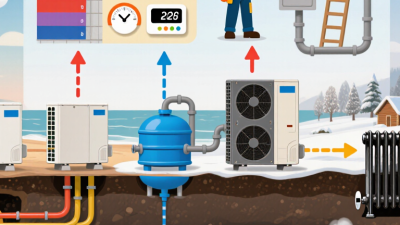
In cold climates, an EVI heat pump must deliver useful heat when outdoor air is far below freezing. Enhanced vapor injection can support heating capacity at low temperatures, but the technology alone does not guarantee strong performance. Buyers should compare capacity and COP at the same outdoor temperature and water outlet temperature. Details matter.
Look closely at operating data around -15°C and colder, where available. Check whether the unit can maintain the required water temperature without frequent backup heating. Ask for test conditions, defrost behavior, and capacity after frost has formed on the coil. A tidy catalogue curve may not show how a system performs through repeated defrost cycles. That gap deserves attention.
Controls and installation also shape real-world results. A stable defrost strategy can reduce temperature swings indoors, while poor drainage may let meltwater refreeze beneath the unit. Review low-temperature start-up limits, compressor operating ranges, and noise data under load. For a fair comparison, request independent test reports alongside manufacturer specifications. Test it cold. Field conditions vary, and even a well-rated unit can disappoint if its output is mismatched to the building’s heat loss or radiator temperatures.
Evaluate suppliers using conditions your project will actually face, not a headline COP. Request independent test reports showing heating capacity, COP, outlet-water temperature, defrost behavior, and noise at -7°C, -15°C, and the design minimum. Check that reports identify the exact model and test conditions, and use relevant methods such as EN 14511 or EN 14825. The IEA’s Future of Heat Pumps (2022) estimates heat pumps met about 10% of global space-heating demand in 2021. That makes dependable field performance more than a sales claim.
Tips: Ask for cold-climate installation references and spare-parts lead times. Review the compressor operating range, warranty exclusions, and factory quality-control records. A brochure is only a snapshot. Seasonal output can differ when defrost cycles, installation quality, and local humidity come into play.
Compare suppliers with the same load profile and water-temperature requirements. Ask for data at 55°C if your project needs high-temperature water; low-temperature test results alone may not answer that question. Check how the manufacturer handles commissioning and technical support across your target market. One weakness in this evaluation: published test data rarely captures every site condition, so verify key claims with operating references where possible.
How to evaluate Chinese EVI heat pump manufacturers
Suggested buyer-assigned weighting for comparing suppliers—not measured scores or market-survey data. Verify each area with model-specific technical documents, test reports, certifications, and service commitments.
China’s EVI heat pump manufacturers serve different buyer needs. These ten profiles are capability snapshots, not a verified ranking. One focuses on inverter control, aiming for steady output as outdoor temperatures fall. Another emphasizes compressor integration and clear component traceability. A third designs compact residential units for limited utility spaces. A fourth develops hydronic systems for radiators and underfloor heating. A fifth offers OEM configurations, though customization can lengthen sampling.
A sixth targets modular commercial projects, where staged capacity helps match changing demand. A seventh concentrates on controller interfaces and remote monitoring. An eighth highlights low-ambient testing, but buyers should ask for test conditions and measured results. A ninth builds around domestic hot-water applications, including storage-tank coordination. A tenth supports export projects with documentation and service planning. A ranking can mislead. Public data may be uneven, and product claims need checking against the intended climate, load, and installation.
Tips: Request performance tables at several outdoor temperatures, not one headline rating. Confirm noise levels, defrost behavior, warranty terms, and spare-parts access. A factory visit or sample review can reveal details that a polished brochure misses.
For global buyers, sourcing an EVI heat pump manufacturer should start with the intended climate, water temperature, and installation conditions. Share a clear project brief, including capacity, voltage, operating range, and expected delivery schedule. Ask for performance data at relevant outdoor temperatures, not just a headline efficiency figure. Small details matter. A missing test condition can make two product quotes hard to compare.
Compliance needs market-specific checking. Request current test reports, product documentation, and certificates applicable to the destination country. Confirm that model numbers match across the nameplate, report, and shipping documents. Where requirements are unclear, consult a qualified local testing or compliance professional. A complete-looking folder can still contain a gap; buyers should verify claims independently rather than rely on a sales summary.
After-sales support is part of the purchase, not an afterthought. Before placing an order, confirm warranty terms, response times, remote troubleshooting options, and access to common replacement parts. Ask who handles commissioning and what information technicians need, such as controller settings or fault codes. That matters. A low purchase price may be less attractive if a failed sensor waits weeks for replacement. Agree on support responsibilities in writing, and review them against the project’s service capacity.
| No. | Anonymous Supplier Profile | Typical Buyer Application | Capacity Range to Evaluate | EVI Product Checks | Compliance Documents to Request | Sourcing and After-Sales Checks |
|---|---|---|---|---|---|---|
| 1 | Profile 01 | Detached homes and small renovations | Approximately 6–12 kW | Confirm the rated capacity and COP at the same outdoor-air and water-outlet temperatures used for competing models. | Model-specific test reports; applicable market conformity documents; electrical and safety documentation. | Check minimum order quantity, sample availability, spare-parts list, warranty exclusions, and local service arrangements. |
| 2 | Profile 02 | Larger homes and hydronic radiator retrofits | Approximately 12–20 kW | Ask for capacity and efficiency data at low ambient temperatures and higher water temperatures; verify defrost behavior. | Performance reports using applicable test methods, such as EN 14511 where relevant to the destination market. | Confirm whether the controller supports the required heating curve, backup heater, and system integration. |
| 3 | Profile 03 | Small commercial buildings and multi-family systems | Approximately 20–40 kW | Review operating limits, water-flow requirements, sound data, and performance at the project’s design conditions. | Request model-specific technical files and installation instructions; confirm documents are valid for the target country. | Assess commissioning support, technical-response times, parts availability, and escalation procedures. |
| 4 | Profile 04 | Modular commercial plant rooms | Multiple units sized to project load | Check cascade controls, staging logic, hydraulic design guidance, and whether performance data cover multi-unit operation. | Verify conformity and test documentation for each model and configuration, including any control accessories supplied. | Request a written project schedule, packaging details, factory inspection options, and a defined commissioning scope. |
| 5 | Profile 05 | Cold-climate residential projects | Approximately 6–20 kW | Compare capacity retention, operating envelope, defrost cycle, and backup-heat requirements at the local winter design temperature. | Request test evidence for the claimed low-temperature operating range; check local electrical and safety requirements. | Confirm cold-weather installation guidance, freeze protection recommendations, and regional spare-parts coverage. |
| 6 | Profile 06 | High-temperature radiator replacement projects | Approximately 8–30 kW | Verify the maximum leaving-water temperature and the corresponding capacity and efficiency; do not compare headline figures alone. | Request performance data at the intended water temperatures and applicable seasonal-efficiency documentation, such as EN 14825 where relevant. | Check compatibility with existing emitters, controls, and backup boilers before placing a volume order. |
| 7 | Profile 07 | New-build low-temperature floor heating | Approximately 6–16 kW | Assess part-load operation, modulation range, circulation requirements, and efficiency at the project’s low water-temperature setpoint. | Request product labels and market-specific declarations where required; confirm that documents match the exact model code. | Review control interfaces, wiring diagrams, installation training, and the process for handling startup issues. |
| 8 | Profile 08 | Domestic hot water and combined heating systems | Approximately 6–20 kW | Check hot-water recovery data, storage-tank compatibility, water-temperature limits, and priority-control settings. | Request electrical, safety, and performance documents for the complete offered configuration, not only the outdoor unit. | Confirm tank, sensor, and valve sourcing; clarify responsibility for system design and commissioning. |
| 9 | Profile 09 | Projects with low-GWP refrigerant requirements | Model-dependent; verify per application | Confirm refrigerant type, charge, safety classification, installation constraints, and technician requirements for the destination market. | Request refrigerant and safety documentation and verify applicable local rules before import or installation. | Check refrigerant-service capability, training materials, labeling, and availability of qualified local technicians. |
| 10 | Profile 10 | Private-label or distributor-led sourcing programs | Defined by the buyer’s product range | Confirm model consistency, change-control procedures, software version management, and performance-test traceability. | Agree in writing who owns product files, labels, manuals, and market approvals; verify each document against the final branded configuration. | Set terms for tooling, packaging, quality inspections, warranty claims, spare parts, and technical support before production. |