Leave Your Message
Choosing among the Top 10 Air Source Heat Pumps for Global Buyers requires more than comparing prices and seasonal efficiency ratings. A suitable system must match the local climate, building envelope, electricity supply, installation skills, and available after-sales service. A unit that performs well in mild coastal weather may struggle during a dry, freezing winter. Small details matter. Pipe insulation, defrost control, noise levels, and correctly sized radiators can affect daily comfort.
The International Energy Agency identifies heat pumps as a key heating technology for the clean-energy transition. Its Executive Director, Fatih Birol, has described heat pumps as “the central technology in the global transition to secure and sustainable heating.” This perspective supports a practical evaluation. Buyers should examine verified test data, refrigerant type, low-temperature capacity, warranty terms, spare-parts access, and installer training. Marketing claims alone are not enough.
No ranking is perfect. Real-world performance can fall below laboratory figures when homes are poorly insulated or systems are oversized. That limitation deserves attention. Still, careful comparison can reduce expensive mistakes and improve long-term reliability. This guide considers leading Air Source Heat Pumps across different markets, including cold-climate models, compact residential units, and higher-capacity systems for larger buildings. It focuses on measurable performance and practical ownership concerns. The best choice is not always the most powerful model. Sometimes, the quieter and simpler system works better.
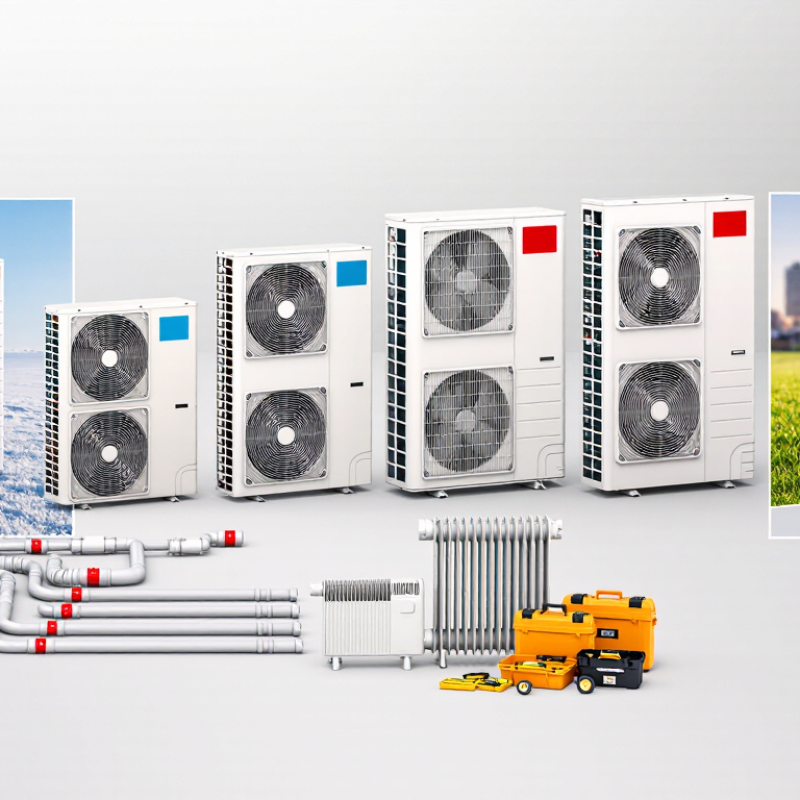
Top 10 Air Source Heat Pumps for Global Buyers
How Air Source Heat Pumps Work and Why Global Buyers Choose Them
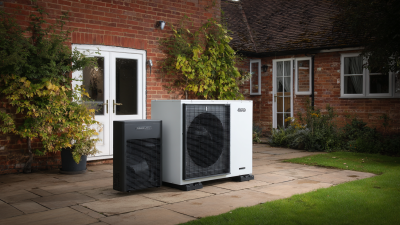
An air source heat pump transfers heat instead of generating it directly. An outdoor coil absorbs low-temperature energy from ambient air. The refrigerant then evaporates, compresses, and releases heat indoors. A reversing valve provides cooling during warmer months. The U.S. Department of Energy reports that modern heat pumps can deliver two to four times more heating energy than their electricity use.
Global buyers are paying attention to measurable performance. The International Energy Agency reported that global heat pump sales increased by approximately 11% in 2022. Its heat pump outlook also indicates that wider adoption could reduce global carbon dioxide emissions by at least 500 million tonnes annually by 2030. Still, published efficiency figures can mislead. A seasonal climate, poor installation, or undersized outdoor unit may reduce real-world savings. A laboratory COP is not a household guarantee.
Tips: Check the seasonal efficiency rating, low-temperature capacity, noise level, refrigerant type, and local service support. Ask for performance data at your region’s winter design temperature. An installer should also inspect insulation, airflow, drainage, and electrical capacity. Do not select equipment by maximum capacity alone. A smaller, well-designed system may perform better than an oversized one that frequently cycles. The choice requires some reflection, not just a price comparison.
A practical comparison of representative air source heat pump configurations for residential and light-commercial applications. Values are typical market ranges and should be verified against the final product datasheet and local test standard.
| Rank | Air Source Heat Pump Configuration | Typical Heating Capacity | Typical COP at 7°C Air / 35°C Water | Seasonal COP Range | Minimum Operating Air Temperature | Maximum Water Outlet Temperature | Common Refrigerant | Typical Outdoor Sound Pressure | Best-Fit Application | Why Global Buyers Choose It |
|---|---|---|---|---|---|---|---|---|---|---|
| 1 | Low-Temperature Monobloc Heat Pump | 5–16 kW | 4.5–5.2 | 3.8–4.6 | −20°C to −25°C | 50–55°C | R32 or R290 | 38–50 dB(A) | Well-insulated homes with underfloor heating or oversized radiators | High efficiency, compact installation, and no indoor refrigerant circuit for many layouts |
| 2 | High-Temperature Air-to-Water Heat Pump | 8–20 kW | 3.5–4.3 | 3.0–3.8 | −20°C to −25°C | 65–75°C | R32, R290, or R744 | 42–55 dB(A) | Existing buildings using conventional radiators | Can reduce radiator replacement work while supporting domestic hot-water demand |
| 3 | Cold-Climate Inverter Heat Pump | 6–18 kW | 4.0–4.8 | 3.3–4.2 | −25°C to −30°C | 55–60°C | R32 or R290 | 40–53 dB(A) | Cold and continental climates with frequent sub-zero operation | Variable-speed control maintains capacity more effectively during low outdoor temperatures |
| 4 | Split Air-to-Water Heat Pump | 4–16 kW | 4.2–5.0 | 3.6–4.4 | −15°C to −25°C | 55–65°C | R32 or R410A | 35–48 dB(A) | Regions where frost protection for outdoor water piping is important | Separates the indoor hydraulic module from the outdoor refrigerant unit, reducing freezing risk |
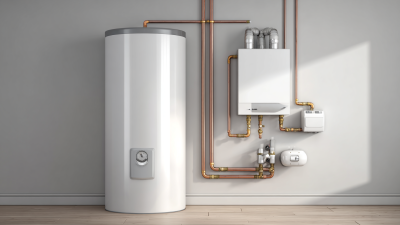
| 5 | Integrated DHW Tank Heat Pump | 1.5–4.5 kW thermal output | 2.5–3.5 | 2.2–3.1 | −5°C to −15°C | 55–65°C | R134a, R290, or R513A | 35–45 dB(A) | Small homes, apartments, utility rooms, and hot-water-only projects | Combines a heat pump and storage tank in one unit to save floor space and simplify installation |
| 6 | Air-to-Air Ductless Heat Pump | 2.5–8 kW cooling or heating | 4.0–5.5 heating COP | 4.5–6.5 seasonal efficiency factor | −15°C to −25°C | Not applicable; direct air delivery | R32 or R410A | 19–45 dB(A) indoor; 40–55 dB(A) outdoor | Individual rooms, apartments, offices, and mixed heating-cooling needs | Low installation cost, fast response, and effective year-round temperature control |
| 7 | Pool Heating Air Source Heat Pump | 5–35 kW thermal output | 5.0–7.0 | 4.5–6.5 | 0°C to 5°C | 28–35°C pool water | R32, R410A, or R290 | 42–58 dB(A) | Residential pools, hotels, sports clubs, and leisure facilities | Provides economical low-temperature heating and can extend the swimming season |
| 8 | Heat Pump with Solar-PV and Battery Integration | 5–16 kW | 4.0–5.0 | 3.5–4.5 | −20°C to −25°C | 50–60°C | R32 or R290 | 38–52 dB(A) | Homes and small commercial buildings with photovoltaic generation | Uses available solar electricity for heating, hot water, and load shifting |
| 9 | Cascade Air-to-Water Heat Pump System | 20–100 kW combined output | 3.5–4.6 | 3.0–4.0 | −15°C to −25°C | 55–70°C | R32 or R290 | 45–65 dB(A) per outdoor module | Multi-family housing, schools, hotels, and light-commercial buildings | Provides modular capacity, partial-load efficiency, and improved operational redundancy |
| 10 | Reversible Air-to-Water Heat Pump for Heating and Cooling | 8–30 kW | 3.8–4.8 | 3.2–4.2 | −15°C to −25°C | 55–60°C | R32 or R290 | 42–58 dB(A) | Warm, mixed, and Mediterranean climates requiring both heating and cooling | One system can provide space heating, cooling, and domestic hot water throughout the year |