Leave Your Message
AI Helps Write

7 Best Dried Fruit Dryers for Commercial Buyers

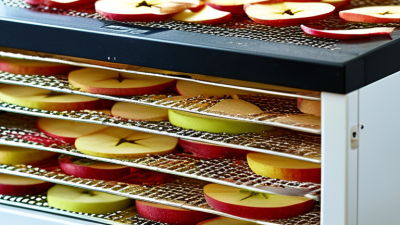
Commercial dried-fruit production depends on repeatable drying, not just a large machine. A Dried Fruit Dryer must remove moisture evenly while protecting color, texture, and flavor across batches. Picture sliced apples on upper trays and thick mango pieces below: uneven airflow can leave one batch leathery and another too soft. That difference affects packaging, product consistency, and waste.

This guide reviews seven dryers suited to commercial buyers, from compact cabinet units to larger systems designed for steady throughput. We compare usable tray area, batch capacity, airflow design, temperature control, construction, cleaning access, and service support. Numbers matter. So does the workday. A machine rated for a certain capacity may perform differently with sticky fruit, crowded trays, or frequent door openings. Buyers should check how manufacturers define capacity and whether test results reflect real products. That detail is easy to miss.

Energy use and installation needs also deserve attention. Check electrical requirements, ventilation, drainage, and floor space before requesting a quote. Ask about replacement fans, sensors, and control parts, not only the warranty. A lower purchase price can become costly if cleaning takes too long or spare parts are difficult to obtain. Still, no single dryer is best for every operation. The right choice depends on fruit variety, batch size, labor, and target moisture. Use these comparisons as a starting point, then confirm specifications with the supplier and, where possible, run a sample batch. Real fruit can be stubborn.
7 Best Dried Fruit Dryers for Commercial Buyers

Commercial Fruit Dryers: Seven Dryer Types and Their Core Uses

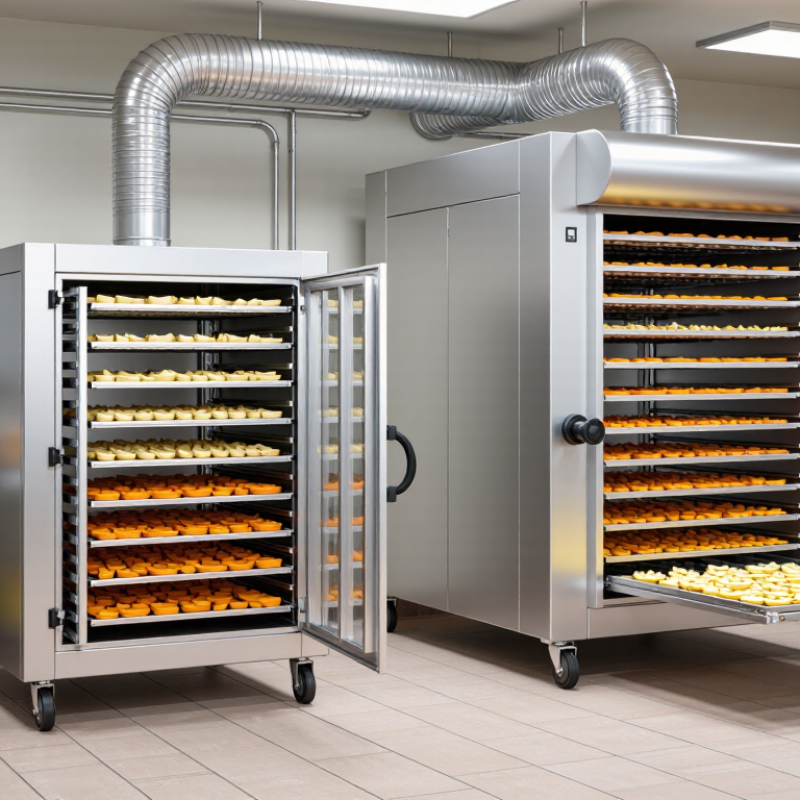
Commercial fruit drying depends on batch size, slice thickness, target texture, and available floor space. A tray or cabinet dryer suits smaller runs and frequent product changes; operators can separate apple rings from delicate berries. Tunnel dryers move loaded carts through heated zones, making them useful for steady, larger batches. Belt dryers carry fruit continuously through controlled airflow, often fitting high-volume lines with consistent cuts.

Heat-pump dryers recirculate warm air and can reduce heat loss, though drying cycles may take longer. Vacuum dryers lower the pressure around fruit, helping preserve color and aroma in heat-sensitive products. Freeze dryers remove ice under low pressure, producing crisp, lightweight pieces, but equipment and operating costs can be substantial. Small batches matter. Solar-assisted dryers use sunlight to support heating, usually with backup heat or airflow controls for cloudy periods.

The dryer alone does not guarantee uniform results. Pieces crowded on a tray may stay damp inside while edges turn leathery. Check airflow, loading depth, and moisture at several points in each batch. Fruit sugar and ripeness also change drying time, so a fixed schedule can mislead. Some buyers focus only on hourly capacity; that number is less useful if cleaning takes hours or the dryer cannot handle the next fruit variety.
Compare Capacity in kg per Batch, Tray Area, and Daily Throughput

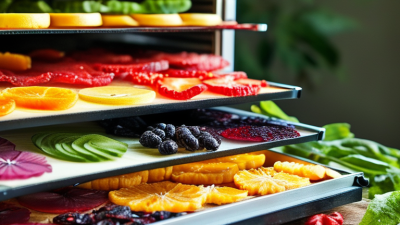
For commercial buyers, a dryer’s batch rating is only a starting point. A stated 100 kg capacity may refer to fresh fruit, not finished dried product. Ask whether figures describe loading weight, usable tray area, or maximum chamber load. Small detail, big difference. Tray area, measured in square metres, shows how much fruit can spread in a single layer. Thick apple rings need more clearance than thin citrus slices. Crowded trays slow airflow and leave damp patches near the center.

Daily throughput depends on batch size, drying time, unloading, and preparation between runs. If a unit holds 80 kg and completes one cycle in 10 hours, a simple estimate is 192 kg per day across three cycles; real production may be lower. A timed trial is still needed; the estimate can flatter a schedule. Fruit thickness, sugar content, humidity, and loading patterns change drying time. Compare usable tray dimensions, not tray count alone; twenty shallow trays can hold less than fewer, wider trays. Request a sample run using your own cut size and target moisture. Record starting weight, finished weight, and hours to reach an even texture. Log each trial.

7 Best Dried Fruit Dryer Sizes for Commercial Buyers

Compare indicative batch capacity, tray area, and estimated daily fresh-fruit throughput across seven commercial dryer sizes. Throughput assumes approximately 1.2 batches per day; actual results vary with fruit type, slice thickness, loading, and drying cycle.

These generic sizing scenarios are for early-stage planning, not specifications for particular machines. Batch capacity and throughput are shown as kilograms of fresh fruit; tray area is shown in square metres.

Assess Heat Sources, Airflow, and Temperature Control at 50–70°C

Commercial buyers should compare heat sources by stability, operating cost, and how evenly heat reaches each tray. Electric elements offer straightforward control, while gas or steam systems may suit facilities with existing utilities. Ask whether heated air contacts the product directly or passes through a separate heat exchanger. That distinction matters.

At 50–70°C, airflow can matter as much as the thermostat setting. Check fan direction, exhaust design, and whether loaded trays block circulation near cabinet corners. During a trial, compare temperatures at the inlet, center, and farthest tray using a calibrated probe. Uneven color or flexible, damp pieces can reveal dead zones, though slice thickness also affects drying. One reading is not enough.

Choose controls that hold the setpoint throughout a batch, rather than only at the sensor. Record temperature and drying time for each fruit and slice size, then check the finished product with an appropriate moisture or water-activity test. Do not assume warmer is always faster or better. Near 70°C, delicate fruit may darken or develop a cooked note. A small test load can expose flaws before production does.

Use Water Activity Below 0.60 as a Stability Benchmark

For commercial dried-fruit production, water activity below 0.60 is a useful stability benchmark, not a shortcut to quality control. It indicates how much water is available for microbial growth, which differs from total moisture content. A chewy mango slice and a crisp apple chip can have similar moisture levels yet behave differently in storage. Measure cooled product with a calibrated water-activity meter, and test pieces from several trays. Warm samples can distort readings.

Dryer choice affects how consistently a batch reaches its target. Look for controlled airflow, even heat distribution, and enough tray space to prevent crowded fruit from drying unevenly. Record drying time, temperature, slice thickness, and water activity for each run. If the outer pieces feel dry but thicker centers remain tacky, extend drying and retest rather than relying on touch alone. Small details matter. That part is easy to overlook.

A reading under 0.60 does not guarantee lasting texture or protect against moisture entering through poor packaging. Let product cool in a clean, dry area, then use packaging suited to its expected storage conditions. Check water activity again after the product has equilibrated, and periodically verify results with samples from different package locations. Readings can vary, and a rushed test may look more reassuring than it should. Use documented process checks alongside sensory inspection and storage trials.

7 Best Dried Fruit Dryers for Commercial Buyers - Use Water Activity Below 0.60 as a Stability Benchmark
Rank Dryer Type Typical Commercial Scale Best-Fit Products Main Advantages Key Trade-Offs Water Activity and Process Checks
1 Continuous Conveyor-Belt Dryer Medium to high throughput; continuous operation with capacity determined by belt width, length, loading depth, and line speed. Uniformly cut fruit slices, pieces, and products suitable for steady, repeated production. Consistent material flow; can be integrated with washing, cutting, cooling, and packing lines; suitable for repeatable production. Higher installation and control-system requirements; uneven cutting or loading can cause uneven drying. Validate belt speed, air temperature, and airflow against the thickest pieces. Test representative product samples after cooling and moisture equalization.
2 Multi-Pass Tunnel Dryer Medium to high throughput; product moves through controlled drying zones on trays, racks, or conveyors. Fruit slices and pieces produced in larger batches or continuous campaigns. More process control than a basic batch cabinet; multiple zones can support gradual changes in drying conditions. Requires floor space and careful airflow balancing; loading patterns and product depth affect drying uniformity. Check for variation between entry and exit zones and across the product bed. Confirm the final water activity using a calibrated meter and a defined sampling plan.
3 Heat-Pump Dehydrator Small to medium commercial scale, with batch capacity dependent on the number and size of trays or chambers. Apples, pears, berries, and other products where controlled, relatively low-temperature drying is desired. Recovers heat from exhaust air and can offer good temperature and humidity control in a closed system. Drying time and energy performance depend on product load, ambient conditions, and equipment design; condensate and filters require maintenance. Track product temperature and drying time as well as chamber conditions. A low chamber humidity reading alone does not confirm the product has reached its water-activity target.
4 Tray or Cabinet Dryer Small to medium batch scale; practical for multiple recipes, seasonal production, and flexible batch scheduling. Fruit slices, small batches, product trials, and operations with frequent product changeovers. Relatively simple to operate; flexible loading; accessible trays make inspection and cleaning straightforward. Batch loading and unloading take labor; tray position and airflow can create differences in drying time. Map hot and cool spots with product samples from different trays. Rotate trays only if the process has been designed and validated for rotation.
5 Vacuum Dryer Small to medium batch scale; chamber size and vacuum-system capacity determine the usable load. Heat-sensitive fruit pieces or products where reduced-pressure drying is a process priority. Reduced pressure allows water to evaporate at lower temperatures than in atmospheric drying. Higher equipment and maintenance costs; loading, chamber sealing, and vacuum performance can affect cycle time. Validate the entire cycle, including loading density and final moisture equalization. Measure water activity on cooled samples rather than relying on vacuum level as a finished-product indicator.
6 Microwave-Vacuum Dryer Specialty commercial scale; throughput depends on chamber design, microwave power, and product loading. Fruit pieces or specialty products requiring faster drying or distinctive texture; suitability should be confirmed in production trials. Combines microwave energy with reduced pressure and can shorten drying for suitable products. Requires careful control of load geometry and energy distribution; higher capital cost and product-specific process development are common considerations. Check for localized over-drying or under-drying. Validate water activity at multiple points in representative batches and confirm texture and color after conditioning.
7 Freeze Dryer (Lyophilizer) Specialty batch production; usable capacity depends on shelf area, chamber size, and the product’s water load. Premium freeze-dried fruit pieces and products intended to retain a porous, crisp structure. Can produce light, porous products with distinctive texture and good rehydration characteristics. Typically has longer cycles and higher equipment and energy costs than conventional hot-air drying; packaging must protect the product from moisture pickup. Confirm both residual moisture and water activity after the product has cooled. Use moisture-barrier packaging and control exposure to humid air during discharge and packing.
Selection and stability note: Water activity below 0.60 is a useful stability benchmark for limiting microbial growth, but it is not a substitute for a validated food-safety plan and does not destroy pathogens. Water activity is not interchangeable with moisture content. Verify the finished product with a calibrated water-activity meter, using representative samples after cooling and moisture equalization. Actual dryer capacity and cycle time vary with fruit type, slice thickness, loading, airflow, inlet moisture, and equipment design.

Rank Dryer Options by Energy Use, Sanitation, and Total Cost of Ownership

A useful ranking of seven commercial dried-fruit dryers starts with the cost of drying each kilogram, not the purchase price. Heat-pump cabinets can use less energy at moderate temperatures, while continuous belt dryers suit steady, high-volume production. Tray systems offer flexibility for mixed fruit sizes. Yet low energy use on paper means little if a machine runs half-empty.

Compare measured energy use at your actual load, temperature, and target moisture level. Ask for test conditions, not just advertised efficiency. Check whether trays, belts, and product-contact surfaces can be removed for cleaning. Smooth corners and accessible drains save labor. Sticky mango residue can hide beneath a belt. That matters.

Total cost of ownership includes electricity, water, cleaning time, replacement parts, and downtime. A simpler dryer may cost less to maintain, though it could need longer cycles. A sophisticated unit is not automatically the better choice. Request sanitation procedures and service intervals, then estimate costs over several years. The ranking should reflect your fruit mix and shift pattern; those assumptions are easy to get wrong. Compare all seven options using the same batch size and moisture target, and record labor as well as energy.