Leave Your Message
Why Choose Air Source Heat Pumps?
Air Source Heat Pumps are becoming a practical choice for lower-carbon heating. They extract heat from outdoor air, even during cold weather, and move it indoors through a refrigeration cycle. The U.S. Department of Energy reports that modern air-source systems can deliver two to four times more heating energy than the electricity they consume. That is significant. It means a small outdoor unit can warm several rooms without burning fuel on site.
Market evidence is also growing. The International Energy Agency reported in The Future of Heat Pumps that global heat pump sales increased by around 11% in 2022. European sales rose by nearly 40%, supported by energy-security concerns and stronger climate policies. Fatih Birol, Executive Director of the IEA, said, “Heat pumps are a proven technology that is available today and can play a key role in helping us to move away from fossil fuels.” His statement reflects industry evidence, not simple marketing.
Yet, Air Source Heat Pumps are not perfect. Poor insulation, undersized radiators, or incorrect installation can reduce comfort and efficiency. Cold mornings expose weak design quickly. Electricity prices also influence savings, and results vary by climate and building type. This is where professional assessment matters. A qualified installer should examine heat loss, airflow, controls, noise, and maintenance needs before recommending equipment. The technology deserves attention, but not blind enthusiasm. Its benefits are real when the system, building, and local energy conditions work together.
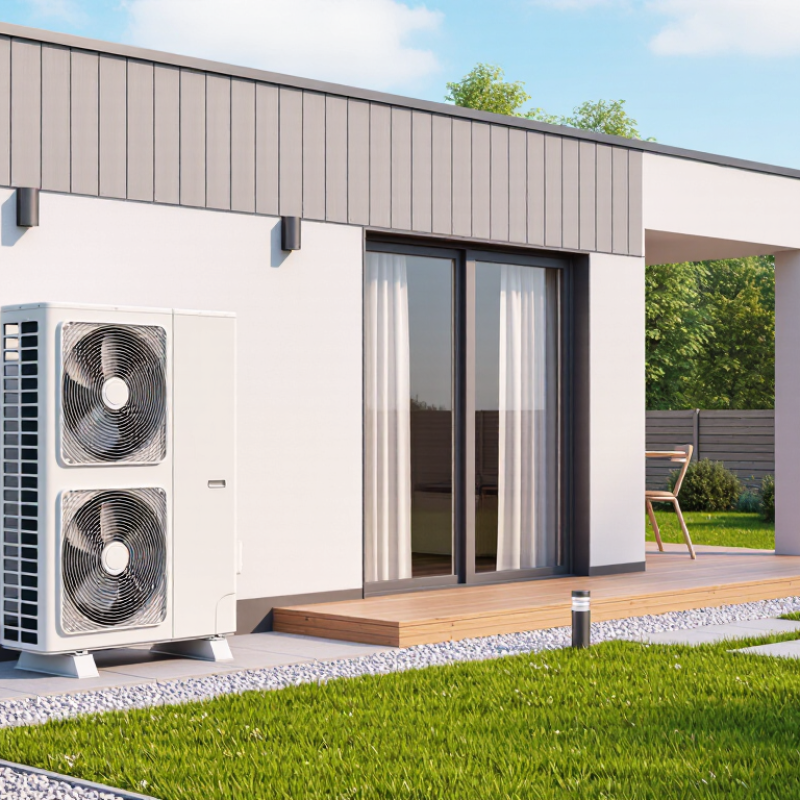
An air source heat pump moves heat rather than creating it through combustion. A fan draws outdoor air across a coil, even during cold weather. Cold air still works. It contains usable thermal energy, although less than warm air.
Inside the unit, a refrigerant absorbs this energy and changes into a gas. The compressor then raises the gas temperature and pressure. A second coil transfers heat into the home’s water or indoor air. The refrigerant cools, expands, and returns outside to repeat the cycle. In summer, the process reverses and removes heat from indoor spaces.
The system’s performance depends on outdoor temperature, insulation, airflow, and correct sizing. A poorly sized unit may cycle too often or struggle during freezing nights. Defrost cycles can briefly reduce heating output, and the outdoor fan may create noticeable noise near bedrooms. Practical installers check radiators, pipework, electrical capacity, and drainage before recommending equipment. Efficiency figures are useful, but they cannot predict every household’s results. Real performance changes with weather and daily habits. The details matter. A careful design usually matters more than impressive specifications.
| Dimension | Typical Information | Why It Matters |
|---|---|---|
| Basic Operating Principle | An air source heat pump transfers heat between outdoor air and an indoor space instead of generating heat through combustion. | Most of the delivered heating energy comes from transferred environmental heat, while electricity powers the compressor and fans. |
| Main Refrigeration Cycle | The system uses an evaporator, compressor, condenser, expansion device, and refrigerant in a closed-loop cycle. | These components raise, move, and release heat so the system can provide useful indoor heating. |
| Heating Mode | Refrigerant absorbs low-temperature heat from outdoor air, is compressed to a higher temperature, and releases heat indoors. | The process can provide heating even when outdoor air feels cold, although performance varies with conditions. |
| Cooling Mode | A reversible valve changes the direction of refrigerant flow, allowing the indoor coil to remove heat from the building. | One system can provide both space heating and air conditioning when designed for reversible operation. |
| Typical Heating Efficiency | Seasonal performance is commonly expressed as a Coefficient of Performance (COP) or Seasonal COP. Instantaneous COP varies with outdoor temperature, indoor temperature, and system design. | A COP of 3 means the system delivers approximately three units of heat for each unit of electrical energy consumed under the measured conditions. |
| Energy Source | Electricity is required to operate the compressor, fans, controls, and circulation pumps; the heat itself is extracted from outdoor air. | Operating emissions depend largely on the carbon intensity of the electricity supply. |
| Low-Temperature Performance | Heating capacity and efficiency generally decline as outdoor temperature falls, and many systems use defrost cycles in cold or humid weather. | Correct sizing, suitable controls, and appropriate backup planning are important in colder climates. |
| Defrost Function | When frost accumulates on the outdoor coil, the system temporarily reverses or adjusts its cycle to melt the frost. | Defrosting maintains airflow and heat transfer, but it can briefly reduce heating output and increase electricity use. |
| Heat Distribution | Heat may be delivered through ducted air handlers, fan-coil units, radiators, or underfloor heating, depending on the system configuration. | Lower-temperature distribution systems often support efficient heat-pump operation, provided the building is properly designed. |
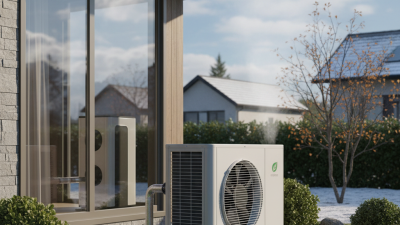
| Installation Requirements | A typical system needs an outdoor unit, an indoor unit or air handler, refrigerant or water connections, electrical service, drainage, and adequate airflow clearance. | Installation quality affects noise, reliability, capacity, comfort, and long-term operating performance. |
| Best Building Conditions | Well-insulated buildings with controlled air leakage and correctly sized heating equipment generally achieve better comfort and efficiency. | Improving insulation and sealing drafts can reduce required capacity and operating costs before or alongside installation. |
| Maintenance Needs | Routine tasks include cleaning or replacing filters, keeping outdoor coils clear, checking airflow, and arranging professional inspection when needed. | Regular maintenance helps preserve airflow, efficiency, indoor air quality, and equipment life. |
| Noise Considerations | Sound is produced mainly by the outdoor fan, compressor, and indoor fan. Noise levels depend on equipment design, operating speed, location, and barriers. | Proper placement and vibration control can improve comfort for occupants and nearby neighbors. |
| Environmental Considerations | Direct refrigerant emissions can have climate impacts, while indirect emissions arise from electricity generation. Refrigerant selection and system maintenance are therefore important. | Lower-carbon electricity and responsible refrigerant handling can reduce the system’s overall environmental impact. |
| Key Advantages | High potential efficiency, heating and cooling from one system, reduced on-site combustion, and compatibility with renewable electricity. | These benefits can support lower energy use and improved indoor comfort when the system is properly selected and installed. |
| Important Limitations | Output may decrease in extreme cold, upfront installation costs can be significant, and performance depends on building design, climate, and electricity prices. | A load calculation and whole-system assessment are recommended before choosing equipment. |
Performance figures are not universal ratings. Actual results depend on climate, outdoor temperature, indoor setpoint, building envelope, equipment sizing, controls, installation quality, maintenance, and electricity supply.