How to Choose the Best Dried Fruit Dryer for Your Business?
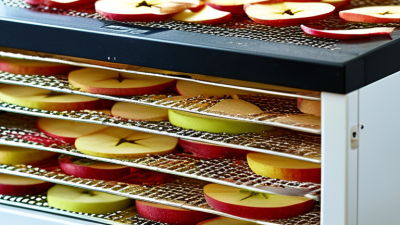
For a fruit-processing business, choosing a Dried Fruit Dryer affects more than the final texture. It can shape product consistency, daily output, labor needs, and operating costs. A machine that suits a small farm may not fit a growing production line. Capacity matters, but so do airflow, temperature control, loading design, and ease of cleaning. Picture trays of apple slices drying unevenly because air cannot circulate freely. That small detail can mean extra handling and less predictable batches. Small details matter.
A careful comparison starts with the fruit you process, your target batch size, and the moisture level you need to reach. Ask suppliers for usable capacity, power requirements, temperature range, construction details, maintenance guidance, and warranty terms. If possible, review a test run using your own fruit. Apples, mangoes, and berries differ in size, sugar content, and drying behavior, so one setting may not suit every product. Look for clear operating instructions and responsive technical support, too. A polished brochure is not enough. Be cautious with broad claims about savings or output; actual results depend on loading, preparation, room conditions, and operator practices. No dryer removes the need for process checks. The sections ahead explain how to compare dryer types, estimate capacity, assess energy and hygiene features, and evaluate suppliers. The best choice is usually the one that fits your real workflow—not simply the largest or most advanced model. It is worth revisiting your assumptions before committing.
Identify Your Products, Production Volume, and Drying Goals
Start with the fruit you plan to dry most often. Mango slices behave differently from blueberries or apple rings. Sugar content, skin, slice thickness, and starting moisture all affect drying time and airflow. Decide whether you need chewy pieces, crisp snacks, or fruit for baking. These goals shape your temperature settings, moisture targets, and tray layout. A small test batch can reveal uneven drying that a product sheet may not show.
Tips: Weigh fruit before and after drying. Note slice thickness, drying time, and texture. Keep a simple batch log; memory gets fuzzy during busy weeks.
Estimate daily output from your real order schedule, not your best-case forecast. A dryer rated for a large load may still slow production if trays are crowded or batches need long cooling periods. Check usable tray area, airflow consistency, cleaning access, and temperature control. Ask whether the machine can handle your largest pieces without forcing you to cut everything smaller. I used to think capacity alone settled the choice. It doesn’t. Test the fruit you sell, then compare the result with your desired texture and production pace.
Compare Dryer Types and Their Operating Principles
Choosing a dried fruit dryer starts with understanding how each machine moves heat and moisture. The operating principle affects drying time, texture, energy use, and product consistency. A small batch of apple slices may dry very differently from thick mango pieces.
Hot-air dryers pass heated air across trays, carrying moisture away from the fruit. They are widely used and relatively straightforward to operate. However, trays near the fan may dry faster, so rotation or airflow testing can matter. Watch the edges. Uneven airflow can leave some pieces leathery while others become brittle.
Heat-pump dryers circulate warm, dehumidified air at lower temperatures. This can help preserve color and aroma, though cycle times and purchase costs may be higher. Freeze dryers remove ice from frozen fruit under low pressure, producing light, crisp pieces. They can retain shape well, but equipment and energy demands are substantial. Not every product needs that finish.
Ask suppliers for trials using your own fruit, cut size, and target moisture level. Measure the final moisture, not just the hours on the control panel. Check cleaning access, tray loading, and how easily operators can repeat settings. A specification sheet cannot show every problem; sticky fruit can still slow a production run. Start with a modest batch. Then compare yield, labor, and texture before committing to larger capacity.
Evaluate Capacity, Temperature Control, and Energy Efficiency
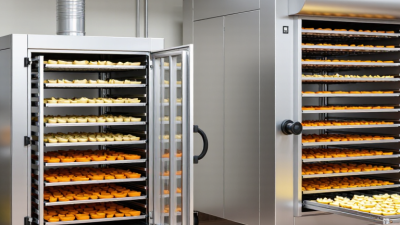
A suitable dried fruit dryer should fit your daily production, not just look impressive on a specification sheet. Compare usable tray area and recommended batch weight with the amount of fruit you can prepare consistently. A large chamber may waste energy when it runs half empty. Check how long loading, drying, and cooling take across a normal workday.
Temperature control matters because fruit pieces differ in size, sugar content, and moisture. Look for adjustable settings, stable sensors, and even airflow between trays. Ask whether the machine can hold a steady temperature when fully loaded. Test a small batch first. Record the fruit’s thickness, drying time, and final texture; a few crisp pieces beside chewy ones may signal uneven airflow or crowded trays. Your ideal settings may take several attempts to find.
Energy efficiency is best judged against dried output, not empty-machine power claims. Request consumption data per batch, then compare it with the kilograms of finished fruit produced. Insulated walls, efficient fans, and heat recovery can reduce operating costs, but the result depends on your load and room conditions. Check the required electrical supply and whether cleaning is straightforward. I would be cautious about choosing solely by a low quoted energy figure; real production runs can tell a less tidy story.
How to Choose the Best Dried Fruit Dryer for Your Business? — Evaluate Capacity, Temperature Control, and Energy Efficiency
Comparison of commercial dried fruit dryer types and selection factors
| Dryer Type |
Typical Fresh-Fruit Capacity |
Typical Operating Temperature |
Temperature and Airflow Control |
Indicative Energy Use |
Best Suited For |
Key Selection Consideration |
| Small cabinet or tray dryer |
Approximately 20–100 kg per batch |
About 40–80°C |
Usually adjustable temperature; airflow may vary between trays and shelves. |
About 1.0–1.8 kWh per kg of water removed for conventional electric hot-air systems. |
Start-ups, small farms, product testing, and seasonal production. |
Check usable tray area and batch uniformity. Rotating trays or changing shelf positions may be needed for consistent drying. |
| Multi-trolley tray dryer |
Approximately 100–500 kg per batch |
About 40–85°C |
Typically includes a digital controller; fan speed and air distribution depend on the design. |
About 1.0–1.8 kWh per kg of water removed for conventional electric hot-air systems. |
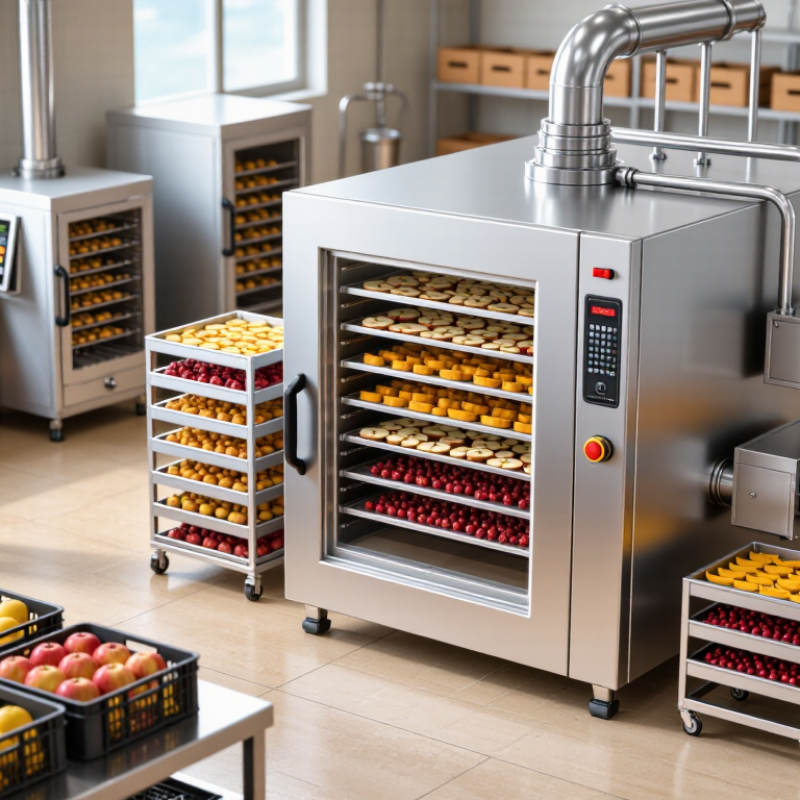
Growing processors that need flexible batch production across different fruit varieties. |
Compare loading capacity with actual tray spacing, airflow uniformity, and the time required to load and unload trolleys. |
| Continuous belt dryer |
Approximately 200–2,000 kg of fresh fruit per hour, depending on product and configuration |
About 40–90°C, often with adjustable drying zones |
Can provide separate temperature, belt-speed, and airflow settings for different stages of drying. |
About 0.9–1.6 kWh per kg of water removed for many hot-air configurations; actual use varies by heat source and heat recovery. |
Established operations with steady, high-volume production and a consistent product range. |
Confirm that the rated feed rate applies to the intended fruit, slice thickness, and final moisture level—not just the belt’s maximum capacity. |
| Heat-pump batch dryer |
Approximately 50–300 kg per batch |
About 20–75°C |
Typically offers precise temperature control and recirculated, dehumidified air. |
Often about 0.4–0.8 kWh of electricity per kg of water removed under suitable operating conditions. |
Processors prioritizing lower-temperature drying, energy savings, or quality-sensitive products. |
Review drying time, ambient operating conditions, service requirements, and performance at the desired batch size. |
Planning note: These are indicative ranges for comparing dryer types, not guaranteed specifications. Actual throughput and energy consumption depend on fruit variety, preparation, slice thickness, incoming moisture, target moisture, loading pattern, ambient conditions, and equipment design. Request a product-specific drying test and verify capacity and energy figures before purchasing.
Assess Food Safety, Cleaning, and Maintenance Requirements
A dried fruit dryer should support safe, repeatable production, not just offer a large chamber. Check whether its food-contact surfaces are smooth, corrosion-resistant, and easy to inspect. Corners, door seals, and tray rails can trap fruit sugars and moisture. Small details matter. Ask how temperature is measured across the chamber, since trays near the airflow may dry differently from those at the center.
Drying reduces moisture, but it does not replace clean handling. Choose equipment that lets staff remove trays and screens without awkward tools. Look for clear access to fans, drains, and air ducts. A sticky film around a drain can attract debris and slow cleaning. Make sure the cleaning instructions match your actual products and shift schedule. If several fruit types run each day, changeovers need to be practical, not merely possible.
Maintenance affects both hygiene and product consistency. Check whether belts, seals, sensors, and fan components are easy to inspect and replace. Ask for a preventive-maintenance schedule and keep records of temperature checks, cleaning, and repairs. Keep records. A checklist can still miss residue under a rail, so include occasional visual inspections after cleaning. This takes time. Yet a dryer that is difficult to maintain can create uneven batches and extra downtime, even when its capacity looks attractive on paper.
Compare Total Costs and Scalability for Your Business
A dried fruit dryer should be compared by its total operating cost, not its purchase price alone.
Include installation, electrical upgrades, trays, cleaning supplies, routine maintenance, and staff time. Ask suppliers for expected energy use under conditions similar to yours, since fruit type, slice thickness, and starting moisture affect drying time. Small details matter.
Estimate cost per kilogram of saleable dried fruit.
A low-cost unit may produce uneven batches, leaving some pieces too moist and others brittle. That can mean extra sorting, re-drying, or product loss. Track a test batch from fresh fruit to packed product, including labor and energy. The numbers may be rough at first. Still, they are more useful than comparing capacity claims alone.
Scalability means checking what happens when orders increase.
Can you add trays or another chamber without replacing your electrical system? Will the dryer fit through the production-room doorway, and can staff load it safely during a busy harvest week? Consider cleaning time and service access, too. A larger machine can sit idle if supply is seasonal or demand is uncertain. On paper, more capacity looks efficient; in practice, it may create extra work. Compare realistic weekly output with your current orders and likely growth, then leave room for the estimates to be wrong.