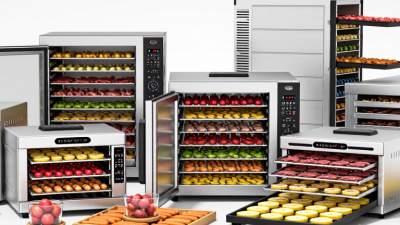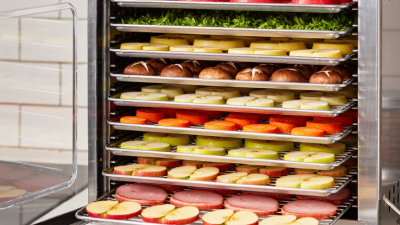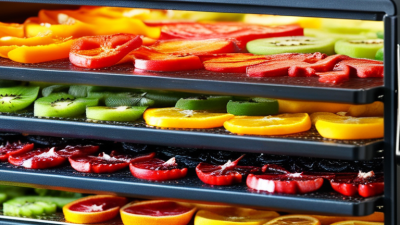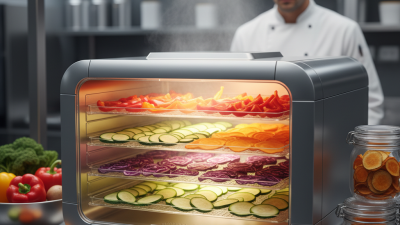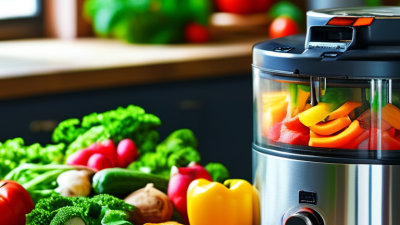
A Food Dehydrator Machine removes moisture with controlled heat and airflow, helping preserve fruit, herbs, vegetables, and prepared snacks. Yet the machines are not interchangeable. A stackable, round-tray model often suits small kitchens and occasional batches, though airflow may be less even. A cabinet-style unit with horizontal airflow usually offers more usable tray space and may reduce the need to rotate trays. That difference matters when drying apple rings beside delicate herb leaves. Small details count.
This guide compares the main types by design, capacity, airflow, noise, cleaning, and intended use—not by hype or a single “best” label. It explains where countertop models fit, when larger commercial machines make sense, and why freeze dryers are a separate category. Check the temperature range, timer, tray material, fan placement, and replacement-part availability before buying. For consistent results, follow reliable drying guidance for each food; thickness, humidity, and load size can change drying time. Even careful comparisons have limits. Product specifications vary, and an impressive tray count does not guarantee even drying. The right choice is the one that suits your recipes, kitchen space, batch size, and willingness to monitor food. This is a practical starting point, not a promise of perfect results.
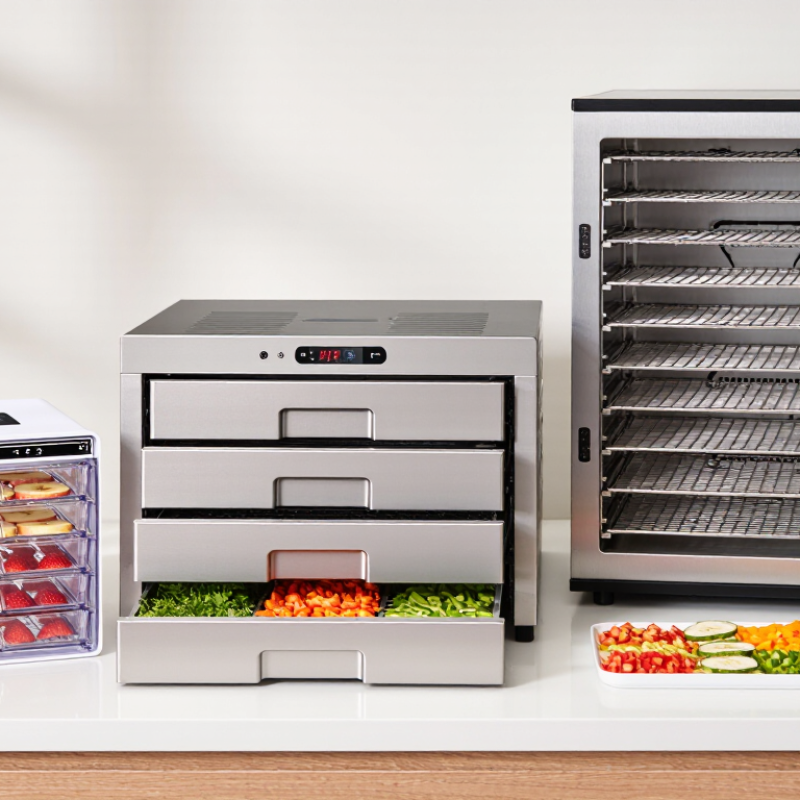
What Are the Top Types of Food Dehydrator Machines?
Stackable Food Dehydrators with Vertical Airflow
Stackable dehydrators use a compact tower of removable trays, with a fan moving warm air vertically through the food. They suit small kitchens and let you add or remove trays as batches change. But airflow can vary between levels, especially when trays are crowded with thick apple slices or herbs. Check pieces near the top and bottom; rotate trays if the manufacturer recommends it. A little unevenness is easy to miss.
The National Center for Home Food Preservation recommends drying fruit at about 135°F and vegetables at about 125°F. These are useful reference points, not a guarantee that every piece is dry; slice thickness and humidity matter too. Keep pieces in a single layer, leave space for air, and test the slowest-drying tray before storing a batch. That step can feel tedious.
Water loss also changes nutrition values per weight. USDA FoodData Central records raw apples with skin at roughly 52 calories per 100 grams, while a dried-apple entry is about 243 calories per 100 grams. The figures vary by variety and preparation, and do not mean drying adds calories. They show why serving size matters. I would not treat a machine’s advertised tray capacity as usable capacity without checking how much space the food needs.
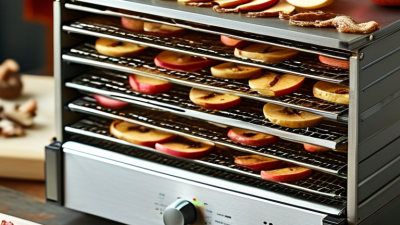
Shelf-tray dehydrators with horizontal airflow move warm air across removable trays, rather than relying on air rising through a tall stack. This layout can help trays dry more evenly and makes it easier to inspect pieces without rearranging every level. It suits sliced apples, herbs, and thin tomato pieces, especially when tray spacing leaves room for air to circulate. Still, airflow cannot fix uneven preparation: thick apple wedges may stay leathery inside while thin edges turn brittle.
Temperature matters as much as fan direction. The National Center for Home Food Preservation recommends about 140°F for fruit and 125°F for vegetables in its home-drying guidance. These are useful reference points, not a promise that every batch will finish at the same time. Humidity, slice thickness, and how full the trays are all affect drying. A crowded tray can block airflow; a few pieces may need longer. It is worth checking texture, not just the timer.
Tips: Cut pieces evenly, leave small gaps, and rotate trays only if drying looks uneven. Let food cool before checking for moisture; warm pieces can feel softer than they are. Keep a simple record of temperature and drying time. Useful, though not flawless.
Commercial cabinet dehydrators suit processors drying repeated, high-volume batches of sliced fruit, vegetables, herbs, or meat. Multiple removable trays use vertical space, while fans move warm air through the cabinet. Adjustable temperature and airflow help operators respond to differences in slice thickness and moisture. Small details matter: crowded trays can block circulation, and damp pieces may need extra drying time. Test a representative batch before setting production schedules.
The FAO’s 2019 State of Food and Agriculture estimated that about 14% of food was lost between post-harvest and retail in 2016. Drying can help preserve suitable surplus, but it does not prevent every kind of loss. A large tray count looks impressive. Yet it can hide uneven results. Check moisture levels across trays, record drying time, and track energy use per kilogram. Cabinet capacity alone does not show operating cost or finished-product consistency. This is easy to overlook. Cleanable food-contact surfaces and accessible fans also matter, especially when changing products or cleaning between batches.
Solar dehydrators use sunlight to warm moving air, drawing moisture from fruit, vegetables, and herbs. Indirect designs heat air in a collector before it reaches shaded trays. This can reduce direct sun exposure and help limit uneven drying. FAO’s 2023 food-loss reporting estimated that 13.2% of food was lost between harvest and retail in 2021. Drying suitable surplus produce can extend its usable life, though it cannot prevent every kind of spoilage.
Sunlight is free. Consistent heat is not. Cloud cover, humid air, and crowded trays slow drying, so thin, evenly cut slices and clear airflow matter. A small thermometer helps check conditions inside the cabinet. USDA home-drying guidance commonly uses about 140°F (60°C) for produce; solar units may struggle to hold that temperature throughout the day. A cloudy afternoon can undo that confidence. Move trays into a protected, ventilated space if conditions worsen, and follow tested preparation guidance for each food. The FAO figure describes broad supply-chain losses, not losses that a household dehydrator can independently recover. That distinction matters.
Hybrid dehydrators combine a solar collector with an electric heating element, using sunlight when conditions allow and electricity when they do not. Solar heat can reduce energy use on clear days, while electric backup helps maintain drying during cloud cover or late afternoon. Useful in practice.
The solar contribution depends on more than sunshine. Collector position, outdoor temperature, airflow, and tray loading all affect performance. A passing cloud may slow drying, and crowded trays can trap moisture between apple slices or herb leaves. Check the unit’s temperature with a separate thermometer, since readings can vary across trays. Drying evenly takes attention.
For reliable results, follow tested food-drying guidance for each ingredient rather than relying on appearance alone. Thin, evenly cut pieces usually dry more predictably, and trays may need rotating if the machine has warm and cool spots. Keep notes on drying time and weather; a small change in humidity can matter. The trade-off is that hybrid units can be more complex than simple electric models, and solar performance is never guaranteed. I would still plan around the electric setting on unsettled days.
| Hybrid Type | How It Works | Heat and Airflow | Weather Dependence | Best Suited For | Main Trade-Off |
|---|---|---|---|---|---|
| Solar cabinet with electric backup | A sun-facing collector warms air that moves through a food-drying cabinet. An electric heater supplies additional heat when solar warmth is insufficient. | Typically uses natural or fan-assisted airflow. Electric backup can help maintain more consistent drying conditions. | Lower than a solar-only dryer, but sunny conditions can reduce electricity use. | Home gardens, small farms, and users who want solar drying with a backup heat source. | The collector and cabinet need suitable placement, and performance varies with sunlight, ambient temperature, and airflow. |
| Solar-assisted electric cabinet dryer | Solar-heated air is directed into an insulated cabinet, while an electric element supplements heat as needed. | Often uses a fan to distribute air across trays; temperature controls depend on the design. | Moderate: the electric element can support operation during cloudy periods, although energy use may increase. | Users seeking a more controlled cabinet-style setup for batches of sliced fruit, vegetables, or herbs. | More components than a basic electric dryer, and solar contribution depends on collector size and available sun. |
| Solar tunnel dryer with electric boost | Food is placed on racks inside a long, sun-warmed tunnel or chamber. An electric heater can supplement the heat when conditions require it. | Air usually travels along the chamber, often aided by fans. Loading and airflow design affect drying uniformity. | Moderate to high: backup heat helps, but the solar section still relies on adequate light. | Small-scale producers and larger batches of produce that benefit from a longer drying chamber. | Requires more space than a compact countertop unit; trays may need rotation if airflow is uneven. |
| Solar-thermal collector with a separate electric drying cabinet | A solar air collector preheats incoming air before it enters an insulated electric dehydrator or drying chamber. | The cabinet’s fan moves preheated air through the trays; its electric heater provides supplemental heat. | Lower than solar-only designs because the cabinet can use electric heat when solar preheating is limited. | Users who want to reduce some heating demand while retaining a familiar enclosed drying chamber. | Collector, ducting, and cabinet must be matched; extra connections can add setup and maintenance needs. |
| Solar-PV-powered electric dehydrator | Solar photovoltaic panels generate electricity for a conventional electric dehydrator, either directly through compatible equipment or through an inverter and battery system. | Uses the dehydrator’s electric heating element and fan; temperature and airflow depend on the appliance. | Depends on solar generation and, where used, battery capacity. Grid or stored-power backup can improve continuity. | Off-grid or solar-powered setups where users prefer an electric appliance’s enclosed trays and controls. | Heating appliances can require substantial electrical power, so panel, inverter, and battery capacity need careful sizing. |
Note: Hybrid designs differ in collector area, insulation, fan configuration, controls, and backup-heater capacity. Drying time and temperature are not fixed values; they depend on the food, slice thickness, loading, airflow, humidity, and equipment instructions.